Motorized Roll-Up Screens
Motorized is the preferred option for most restaurant patios.
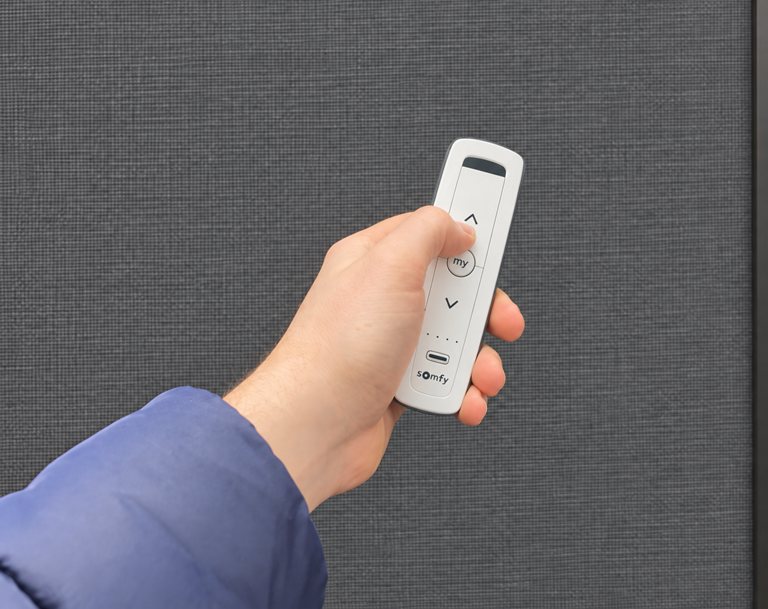
- Somfy radio remote control
- Individual or grouped screen control
- TaHoma app with a compatible hub
- 10-year warranty, Somfy motor included
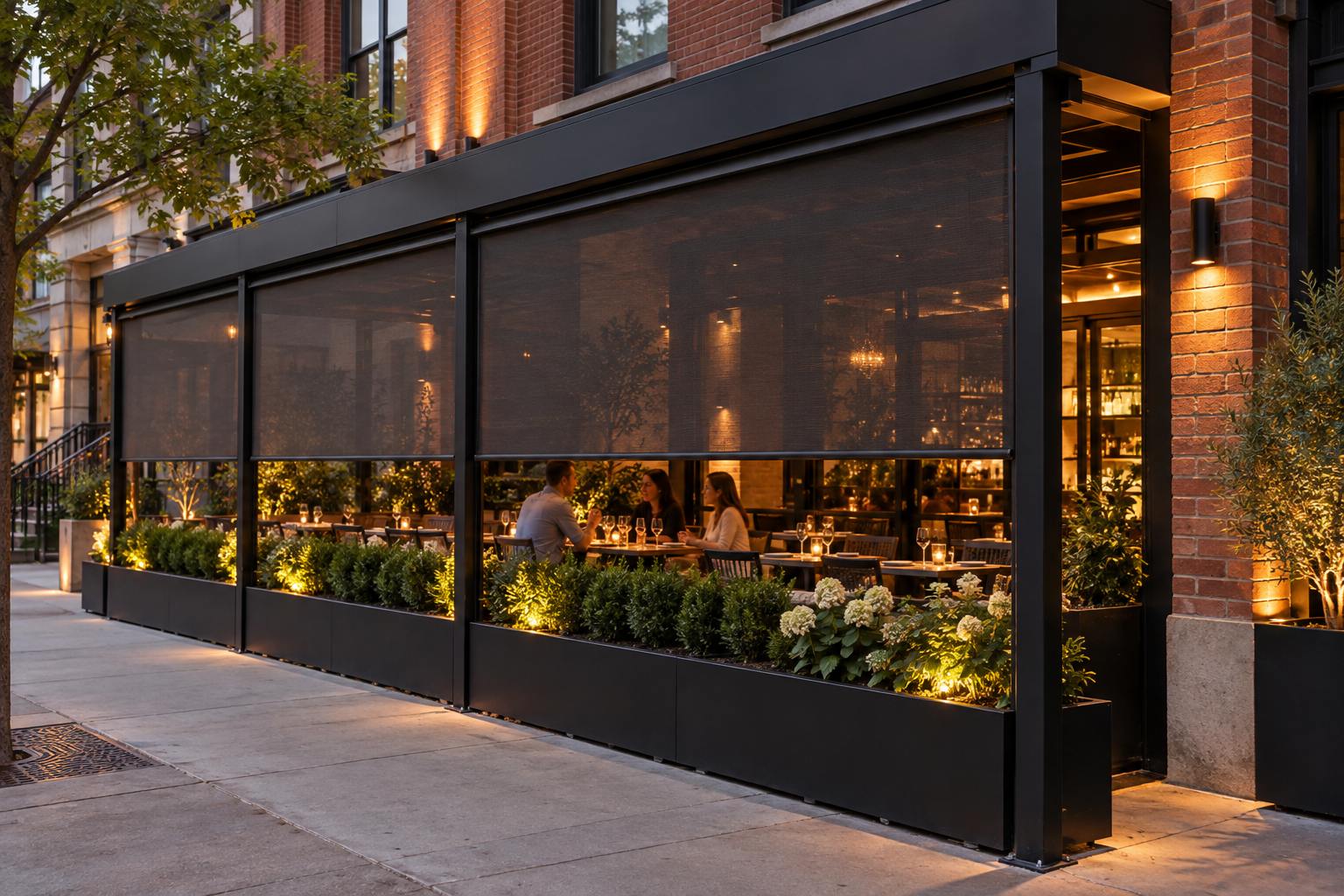
Commercial roll-up screens that cut wind, glare and street exposure on a restaurant patio - and retract completely when the weather is on your side.
Restaurant privacy screens are commercial retractable roll-up fabric screens for patios and licensed outdoor dining. They are zip-track screens, so the fabric edges lock into the side tracks and stay flat through a windy service. They cut wind and glare, define the patio edge and keep more tables comfortable, then retract in good weather. Every screen is custom-made, Somfy-motorized and professionally installed across Toronto and the GTA.
Updated
Cutting harsh sun, wind, and street exposure keeps the perimeter tables in play. Those are usually the first seats guests refuse and the last ones you want sitting empty through service.
Lower one side, close the full street edge, or retract everything - decided by the weather and the service flow rather than fixed at the point of installation.
The patio gets a defined edge without heavy permanent partitions that make the space feel closed off in every season and dated within a few.
Motorized grouped control means opening, adjusting mid-service, and closing down is one action for a staff member rather than a circuit of the patio.
Find Your Layout
Patio layout and licensing footprint decide the run. These four cover most of the commercial sites we quote.
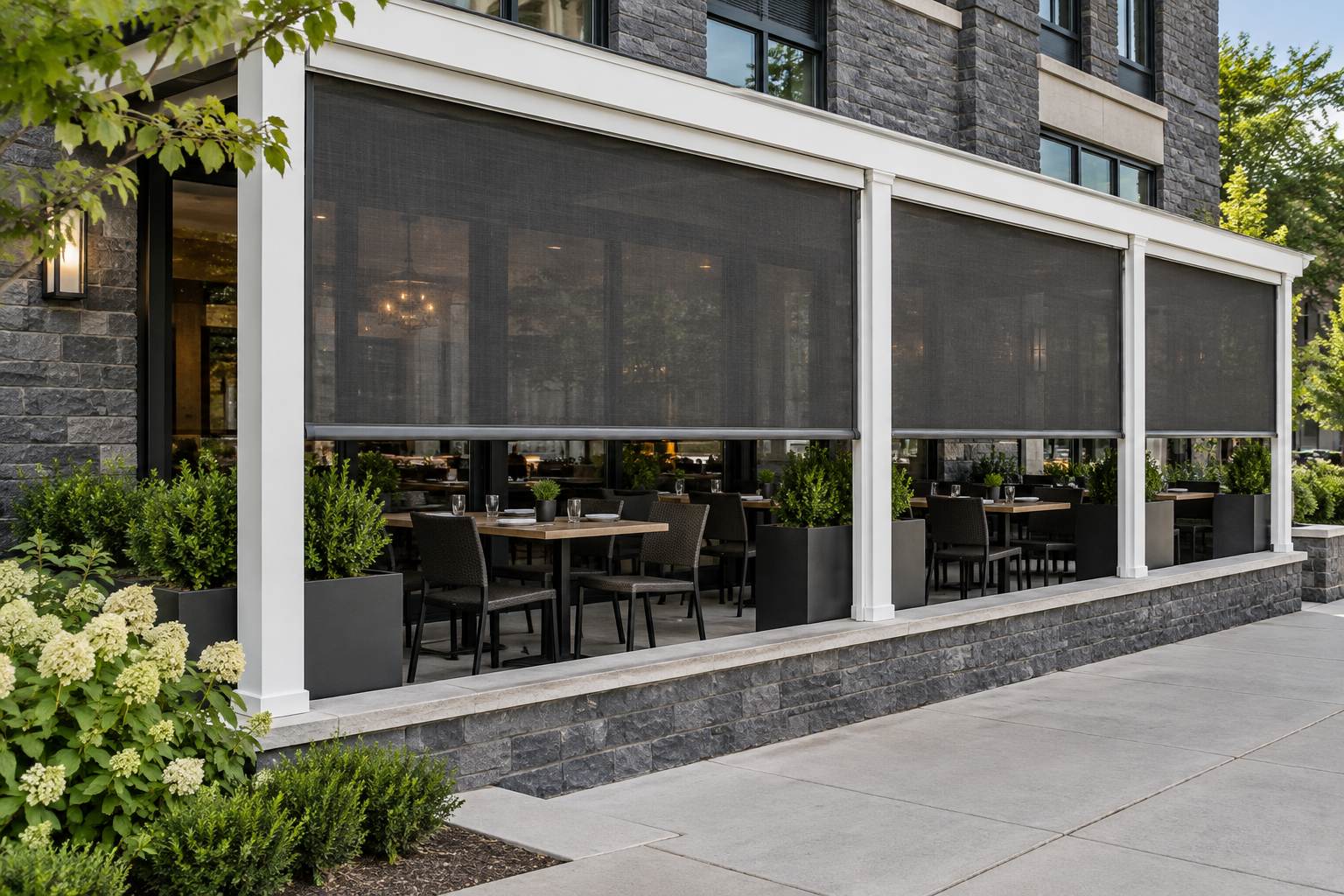 Most Common
A continuous run of bays along the sidewalk or road edge.
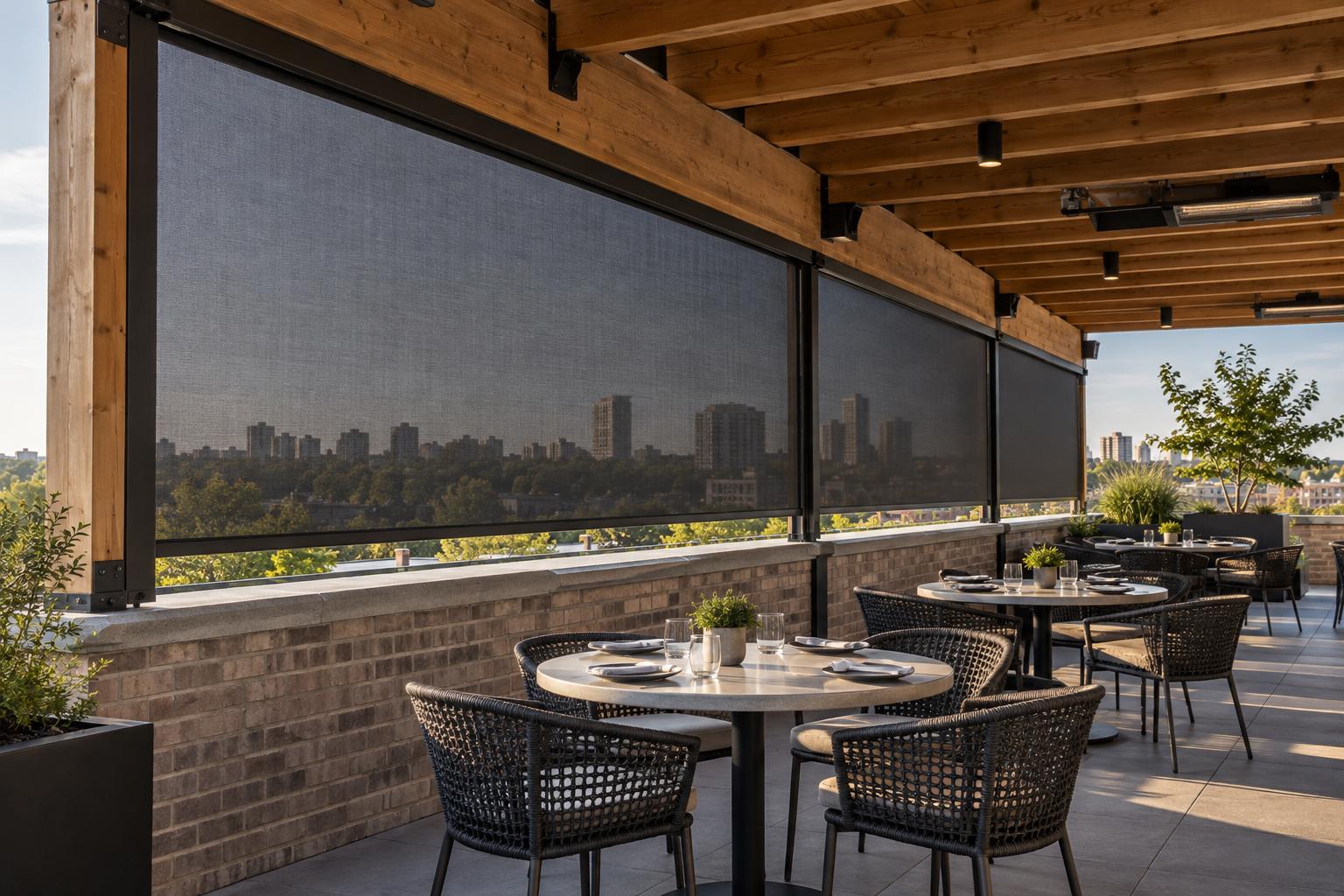
A single side screened where the prevailing wind consistently clears glassware and makes one section of the patio unusable.
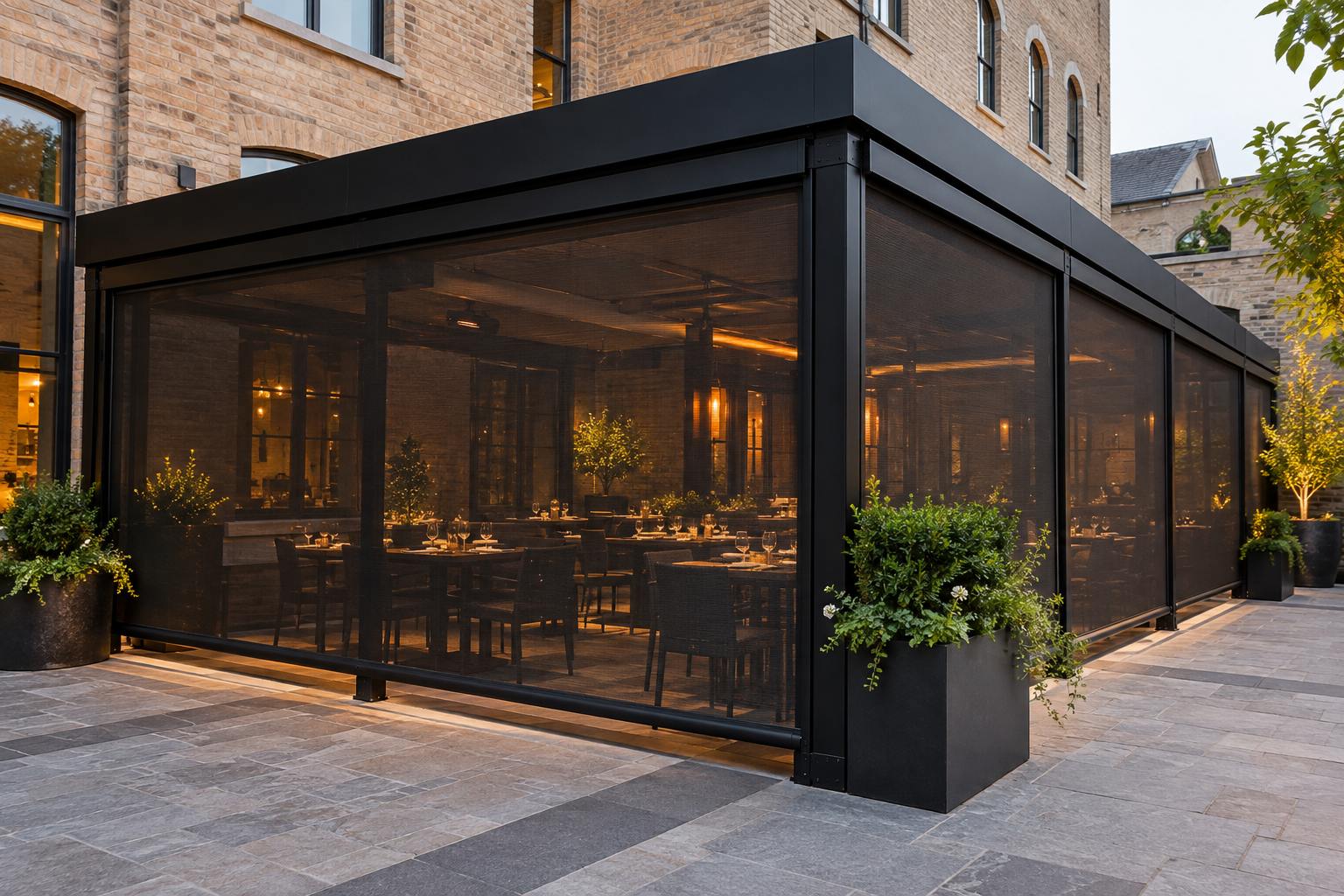
Every open side screened and grouped on motorized control.
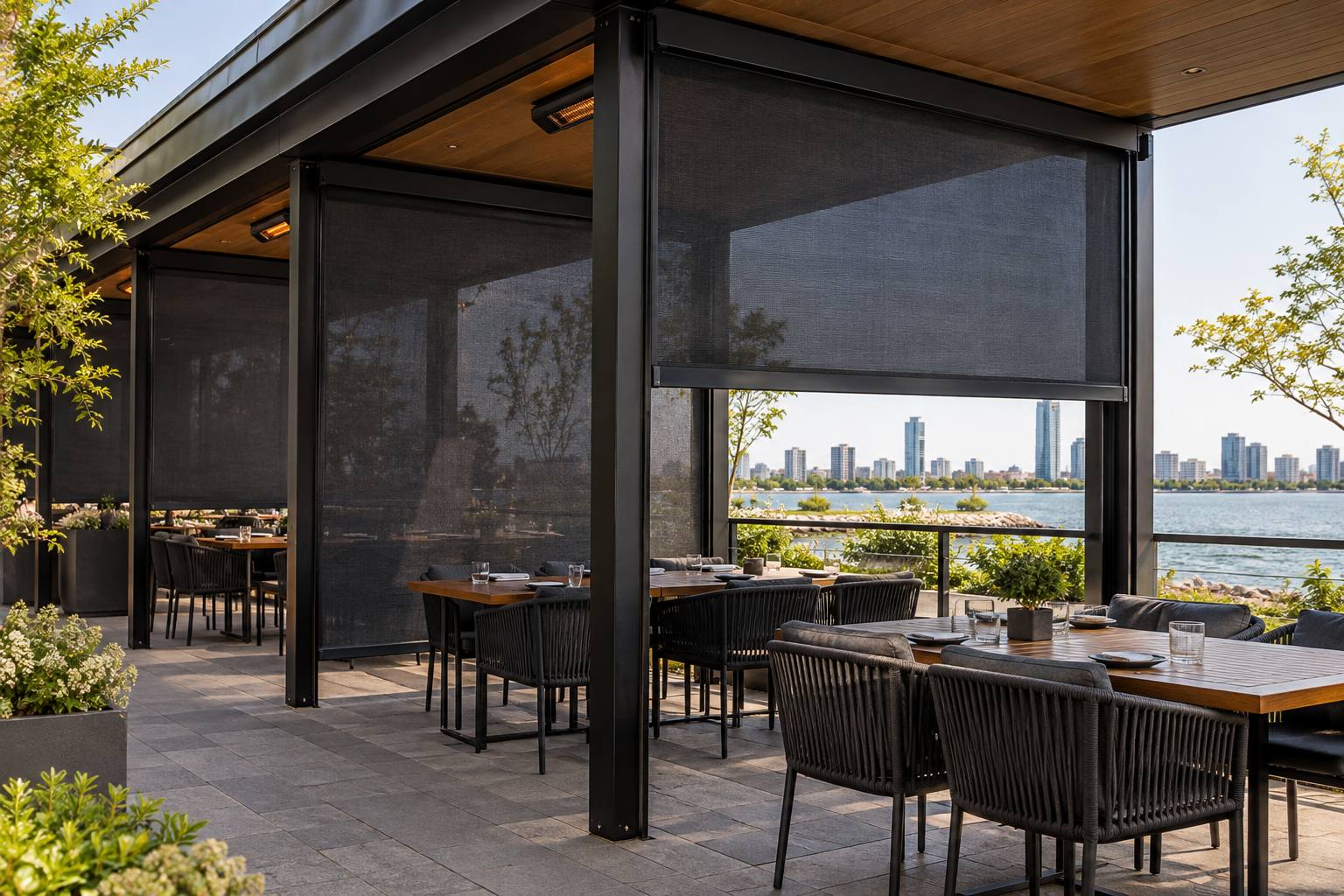
Independent bays that let you divide the patio for a private function while the rest of the space trades normally.
Every screen runs on a Somfy motor, so it raises and lowers at the touch of a button.
Motorized is the preferred option for most restaurant patios.
Prefer a hand crank? Manual operation is available on request for small, easy-to-reach openings. Manual vs motorized
Choose the right openness level for privacy, sun control and view.
Measured to your patio structure, bay by bay
Genuine Somfy motors with full factory warranty
One Somfy radio remote for the whole patio edge
No-obligation site review before anything is ordered
Screens run along the patio perimeter and drop only where they are needed. The full edge can move on one command, or each bay can be handled on its own.
Lower the street or wind-facing bays before service.
Separate diners from foot traffic and passing cars.
Cut low glare that clears the west-facing tables.
Retract the whole edge when the evening is right.
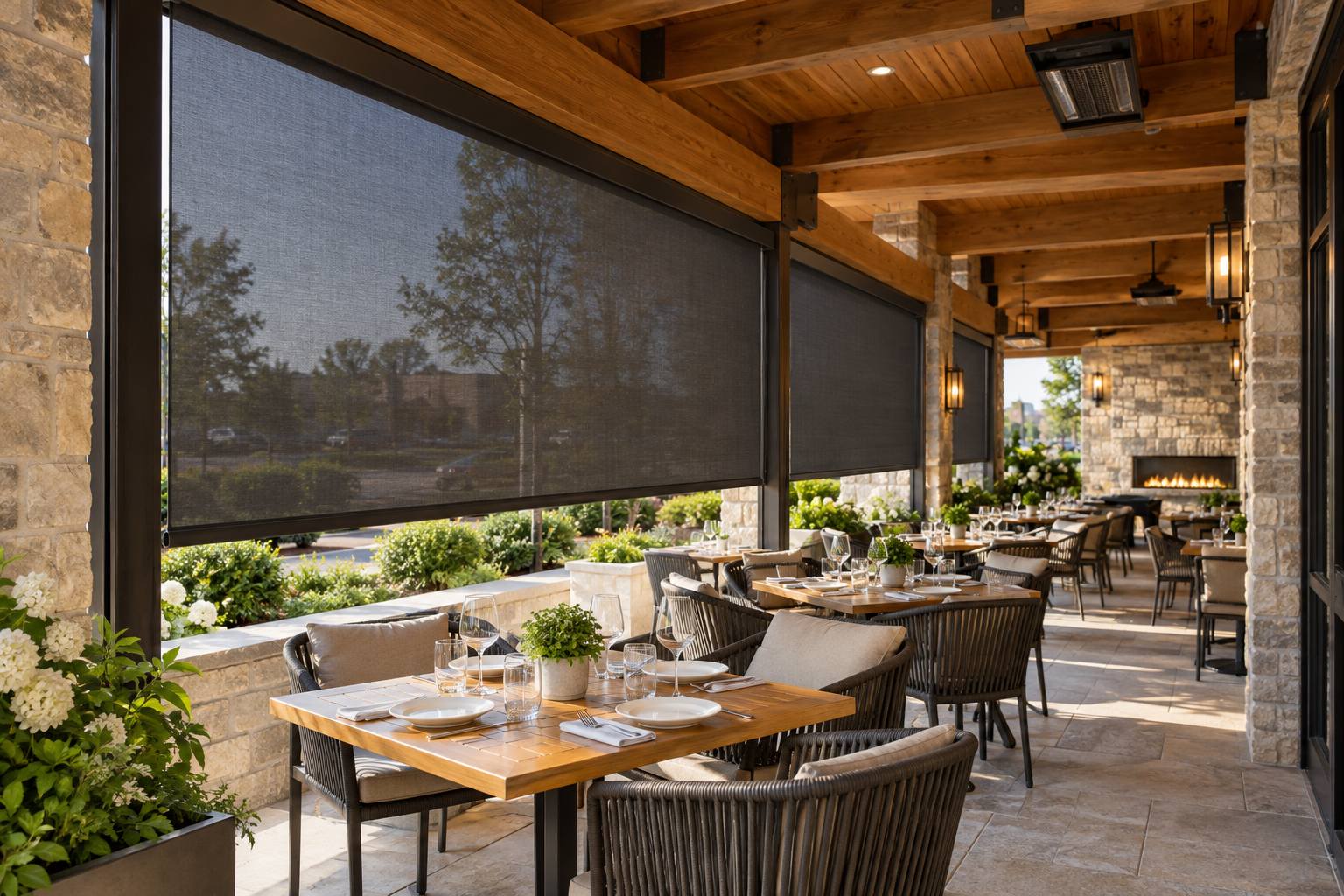
Specified for daily operation in Ontario weather, with the limits stated plainly.
Hardware rated for commercial use handles being opened and closed every service across a full patio season.
Tensioned side channels hold the fabric steady. Capacity follows size and openness - commonly around 160 km/h at larger sizes, with wind sensors on exposed patios.
PVC-coated polyester sheds water rather than soaking through, which keeps a good share of blowing rain off the tables.
Depending on the fabric chosen, screens block up to 99% of UV, which matters most on west-facing patio edges at dinner service.
Cutting wind is what keeps a patio selling through the shoulder weeks either side of summer in Toronto and the GTA.
Marine-grade anodized or powder-coated aluminium resists corrosion through freeze-thaw cycles.
Toronto & the GTA
A restaurant patio works when it feels sheltered, defined, and deliberate. Retractable screens create that without committing the space to a permanent enclosure that reads as closed on the nights you want it open.
For operators across Toronto and the GTA, the practical gain is control: over wind, glare, and street exposure, and over how the patio is set up shift to shift as the weather and the covers change.
See Common Configurations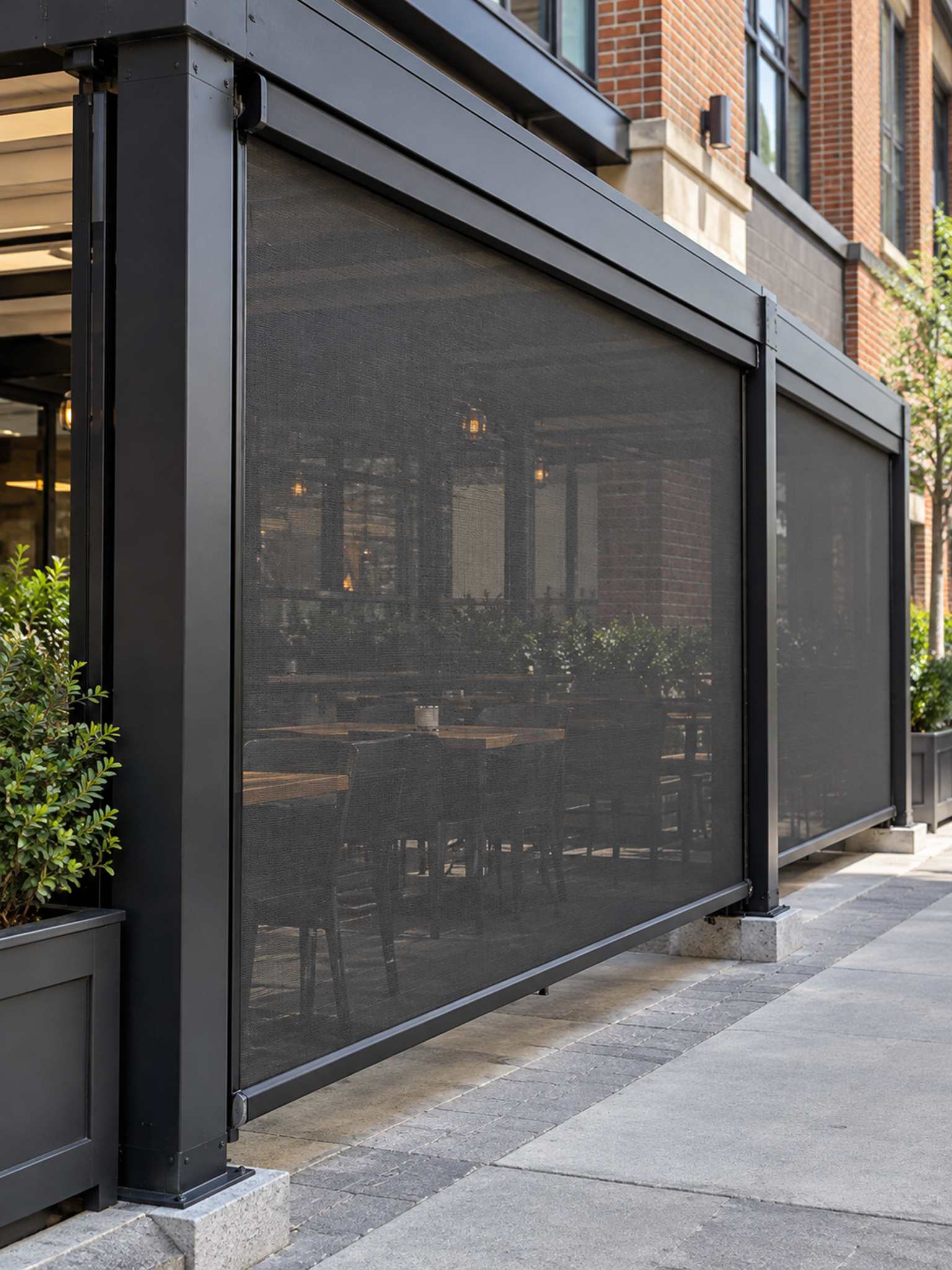
The same aluminium system used on residential projects, sized and finished for a site that opens and closes it every day of the season.
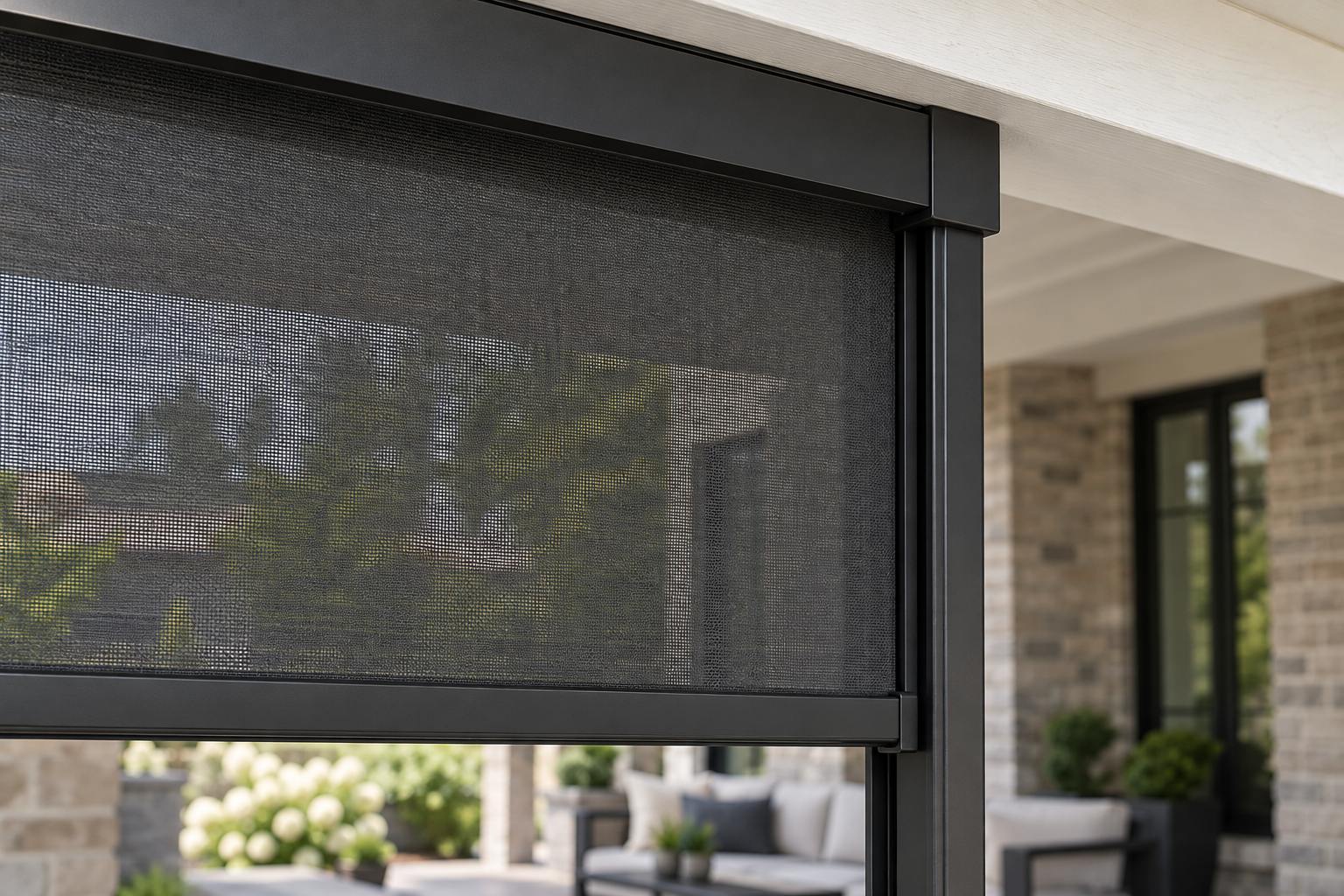
Stores and protects the fabric when the patio edge is open.
Hold the fabric under tension so wind does not disturb table settings.
Keeps the screen level and stable across a long perimeter run.
Match the housing, side channels and bottom bar to the building or the patio furniture scheme. Hardware finishes are selected separately from fabric colour.
Backed by a 10-Year Manufacturer Warranty
Every system carries a 10-year manufacturer warranty, including the Somfy motor supplied with it, and our installation workmanship is covered for 1 year. Both are provided in writing.
Commercial patios carry constraints a backyard does not - licensing, access, and a schedule that cannot afford downtime.
A licensed patio has a defined boundary, and anything mounted at its edge needs to respect it. We establish where the licensed footprint actually sits before specifying, because a screen line that encroaches - or that changes how the boundary reads to an inspector - is a problem discovered far too late once the hardware is up.
Restaurant patios present a wider range of mounting surfaces than residential work: existing awnings and pergola frames, masonry building faces, freestanding posts, and sometimes nothing usable at all along one edge. Where an edge has no anchor, adding posts or a header becomes part of the project scope, and we identify that at the site review rather than after ordering.
Most patio installs can be completed outside service, and on commercial sites we schedule around your trading hours as a matter of course. Multi-bay motorized runs with wiring take longer than a residential job, so we confirm realistic timing and any required electrical work up front rather than discovering a closed lunch service was needed.
The rail system and weighted bottom bar hold the screen in place, so it keeps the patio edge defined in wind rather than flapping between tables. Capacity depends on the opening size and the openness of the fabric - commonly around 160 km/h across a larger bay. On a commercial site the judgement about severe weather changes shift to shift, so we walk staff through operation at handover and specify a Somfy wind sensor, which removes the judgement call entirely by retracting the system automatically and preserving the fabric.
Each fabric performs differently across privacy, view-through, airflow, and UV blocking. We help you choose the right option for the way the space is used.
See how each fabric looks on a pergola →
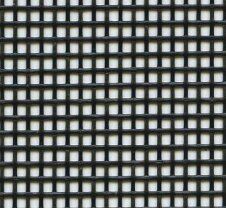
Heavy-duty insect mesh with maximum airflow. Neighbours can see through clearly, so privacy is not a feature of this fabric.
45% Openness
Recommended:
Balanced solar screen that cuts heat and glare while preserving reasonable outward visibility from inside the space.
10% Openness
Recommended:
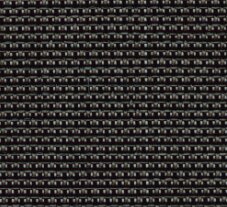
Our most popular fabric with solid daytime privacy, excellent UV blocking, and a comfortable filtered-light quality inside.
5% Openness
Recommended:
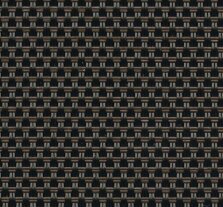
Near-opaque daytime privacy with softly diffused interior light. Neighbours cannot make out occupants or furnishings.
1% Openness
Recommended:
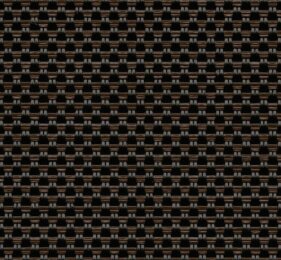
Fully opaque fabric that provides complete visual blackout and total weather enclosure from either side, day or night.
0% Openness
Recommended:
Near-clear enclosure that preserves your view while blocking weather and UV. Fire rated.
0% Openness
Recommended:
Yes. Restaurant patio screens are motorized, so staff can operate multiple screens quickly and consistently, with grouped control turning opening, service changes and closing into one action instead of a circuit of the perimeter.
SunTex 95 at 5% openness is the usual choice. It gives solid daytime separation and strong UV blocking while keeping the outward view and the light quality that makes a patio feel like a patio rather than a tent.
Where the patio faces directly onto a busy sidewalk and separation matters more than the view, SheerWeave 4800 at 1% goes further. We bring samples to the site review.
Yes. Screens can be stopped at any intermediate position, which is how most operators actually run them - dropped part-way to cut low sun off the west tables while keeping the patio visibly open to the street and to passing trade.
Regularly. Most commercial projects mount to something already on site - an awning frame, a pergola structure, a masonry building face - and we coordinate with your contractor, property manager, or landlord as the project requires.
Where an edge has no usable anchor, adding posts or a header becomes part of the scope and is identified at the site review.
They should not, but the boundary has to be established before anything is specified. We confirm where the licensed footprint sits and keep the screen line inside it. Because requirements vary by municipality and by licence, we recommend confirming your own conditions with the licensing authority as part of planning.
Most patio installs are completed outside trading hours, and scheduling around service is standard on commercial sites. Multi-bay motorized runs with wiring take longer than a residential job, so we confirm timing and any required electrical work in advance rather than partway through.
The rail channels and weighted bottom bar hold the fabric in place, so the screen keeps working through a windy service. How much it takes follows the surface area of the opening and how open the fabric is - a more open weave passes air through rather than catching it. On a larger patio bay that is commonly around 160 km/h, and more on smaller ones. On a commercial site that judgement about severe weather changes with the shift, which is why a Somfy wind sensor is worth specifying - it retracts the system automatically above a set threshold and preserves the material.
Yes. The fabric edges zip into the side tracks and the bottom bar sits on the patio surface, so a lowered screen leaves no side gaps for insects to get through. Where insects rather than privacy are the main complaint - a patio backing onto water or heavy planting - TuffScreen at 45% openness is the dedicated insect mesh, prioritising airflow over separation.
Yes. With 5 percent or 10 percent fabric the outward view stays very usable during the day, while visibility from the street looking in is reduced much more strongly. After dark that reverses, because the fabrics work by contrast - once the patio is lit brighter than the street, the separation weakens. Soltis Proof 502 is the fully opaque option if evening privacy is a firm requirement.
Yes. The same motorized screens mount outside the dining room windows and storefront glass. Lowered, they cut glare and solar heat on the window tables and reduce the view in from the street, while guests can still see out. Because they sit outside the glass, they stop the heat before it gets in, which interior blinds cannot do, and they retract fully when you want the street view back.
Every system carries a 10-year manufacturer warranty, which includes the Somfy motor supplied with it, and our installation workmanship is covered for 1 year. Both are provided in writing.
Tell us about the patio footprint and how it trades, and we will recommend the bay layout, fabric and control to match.