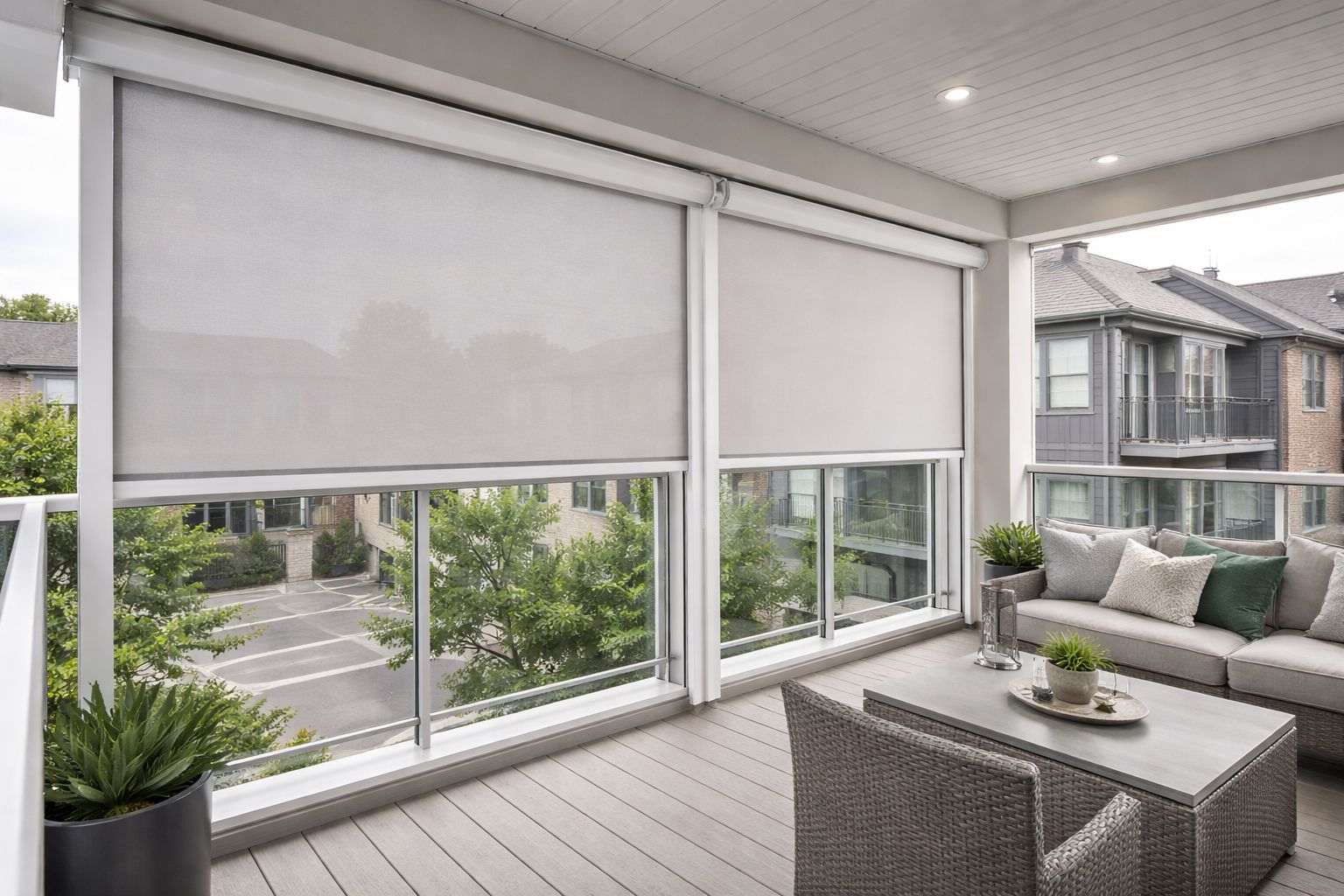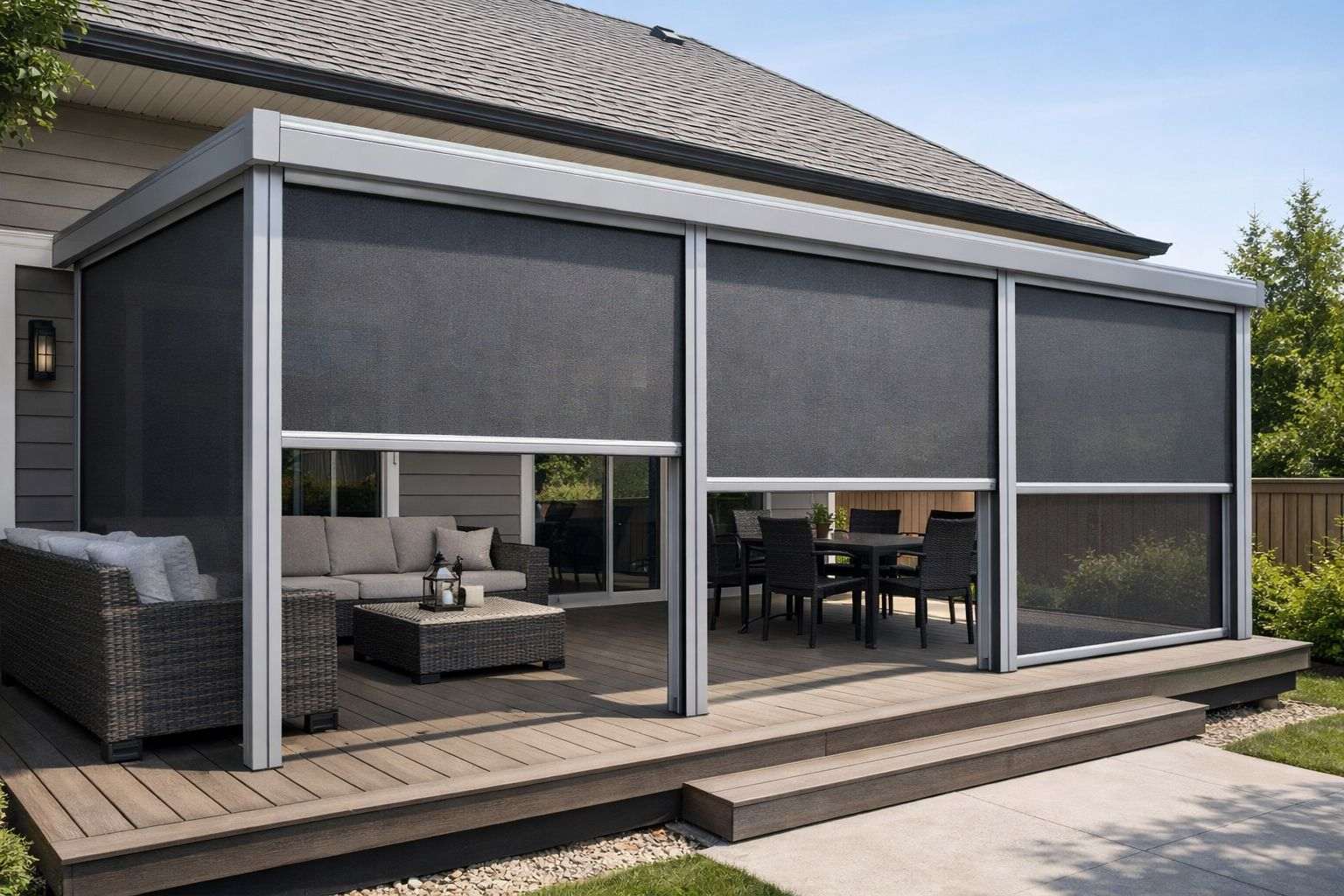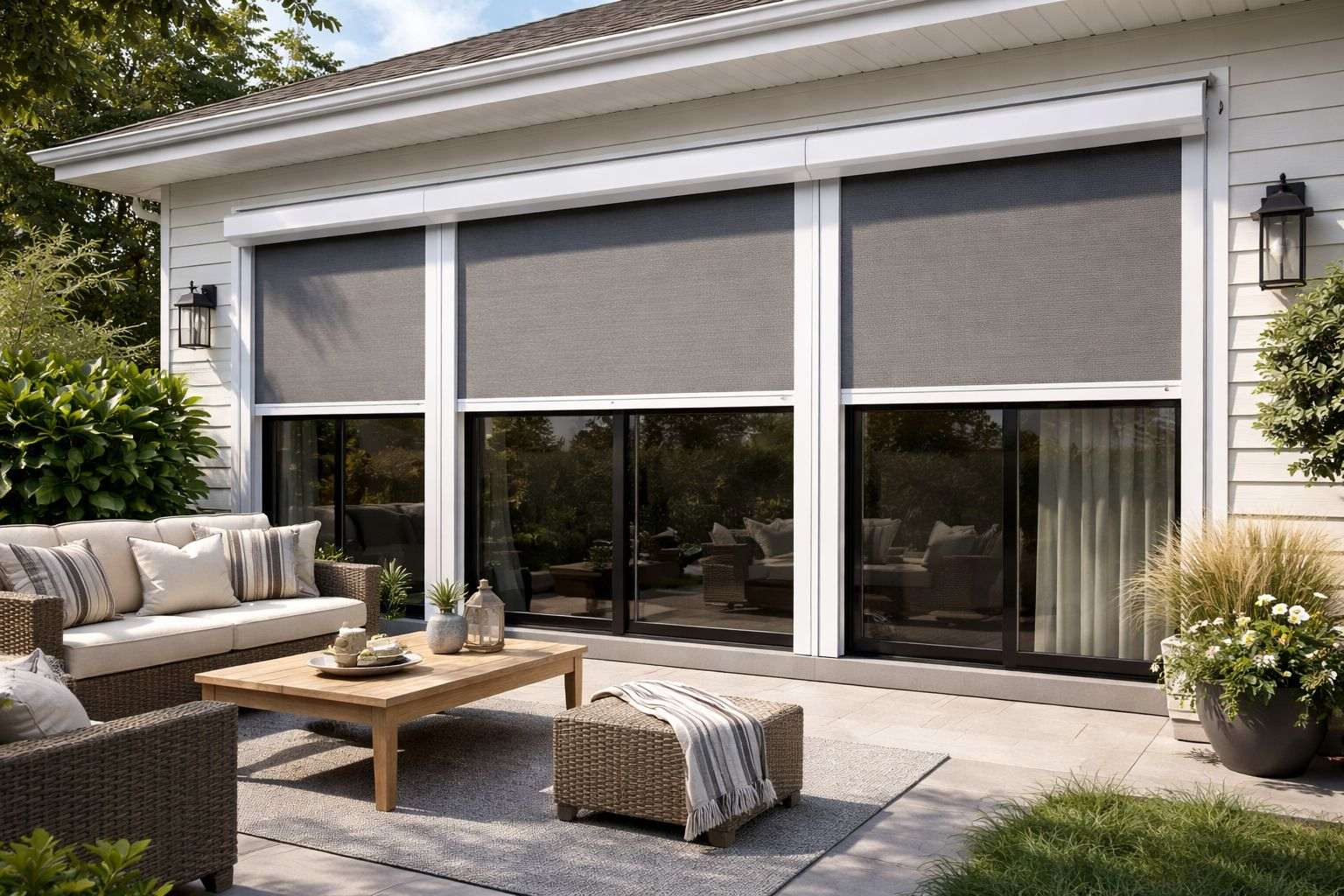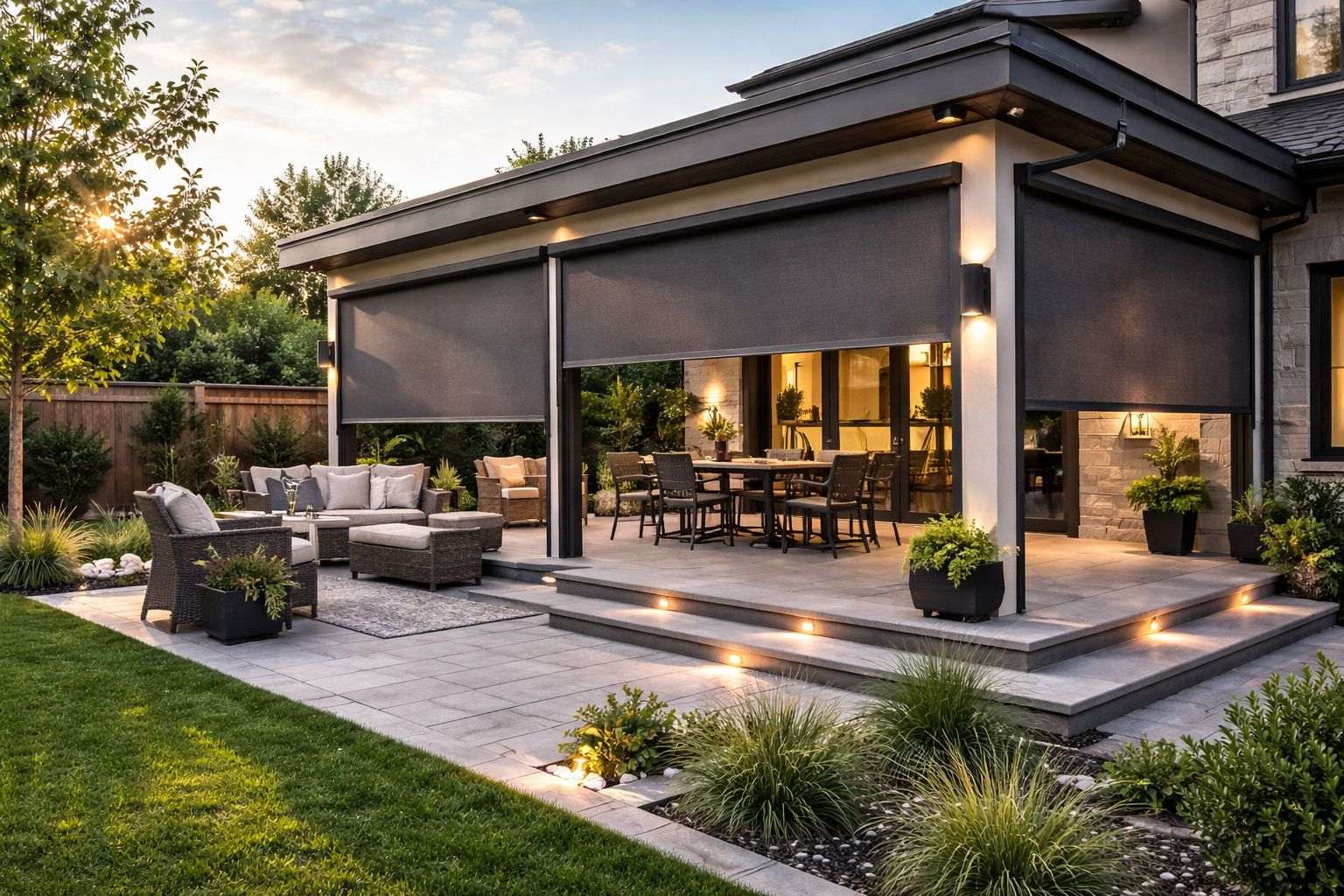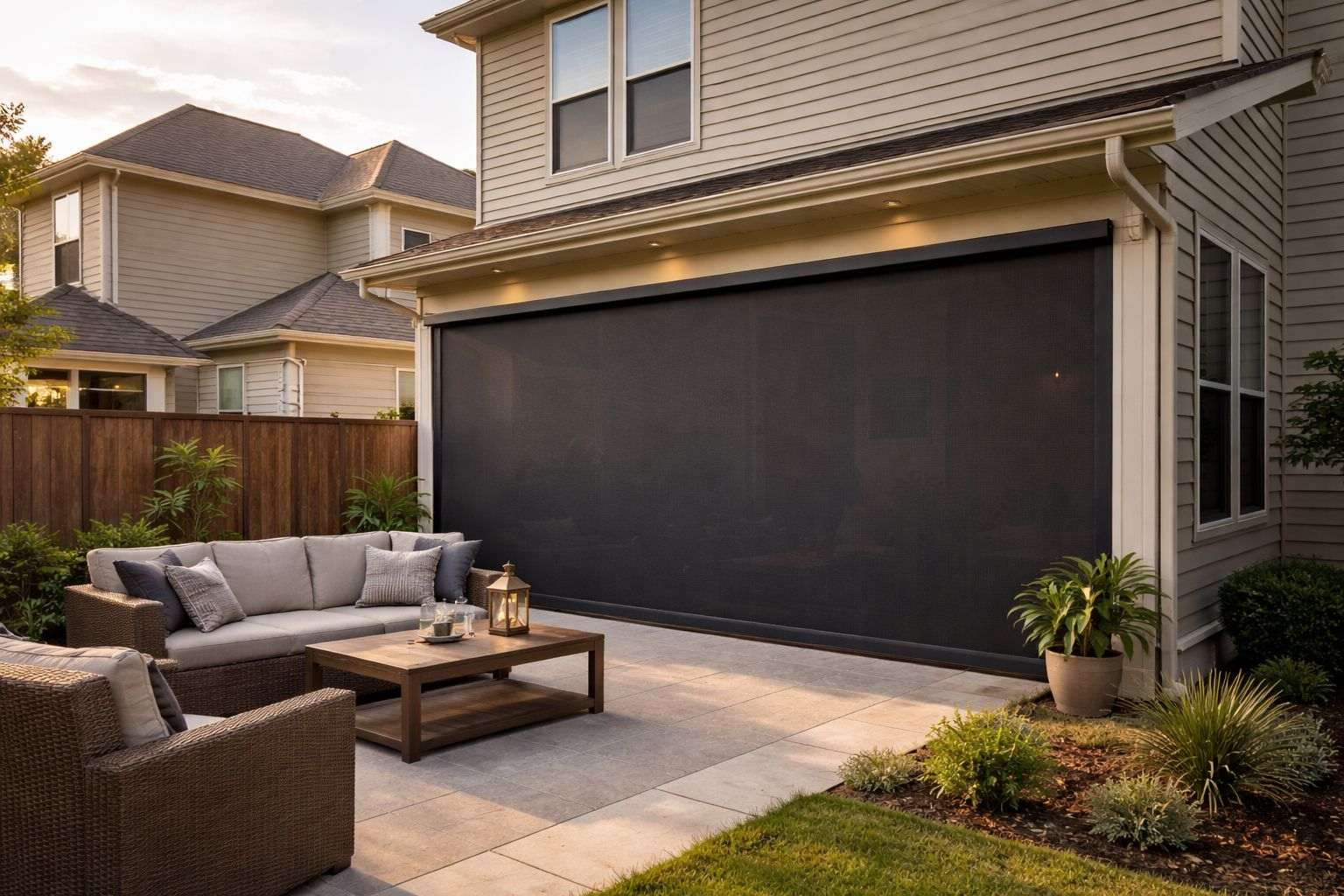
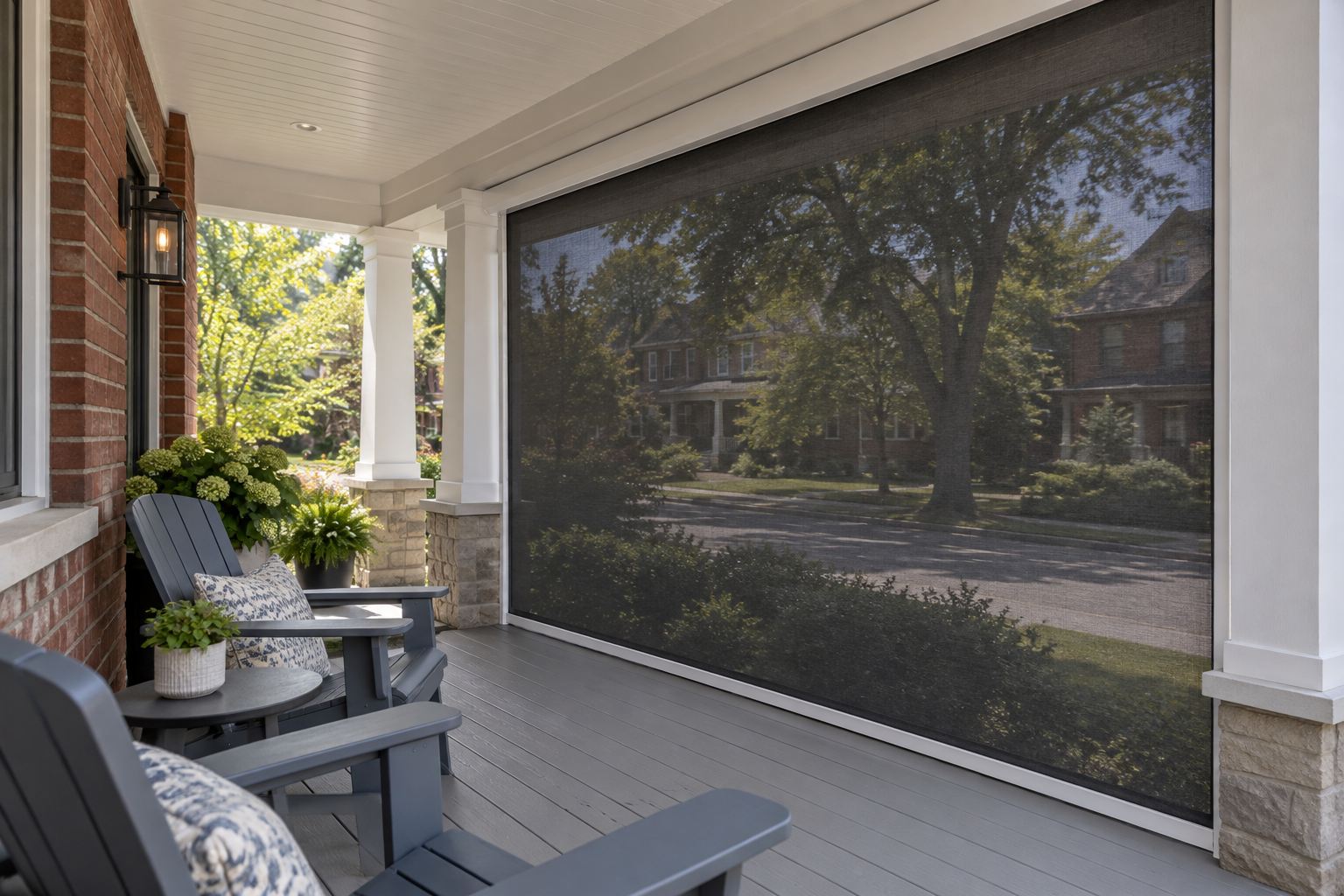
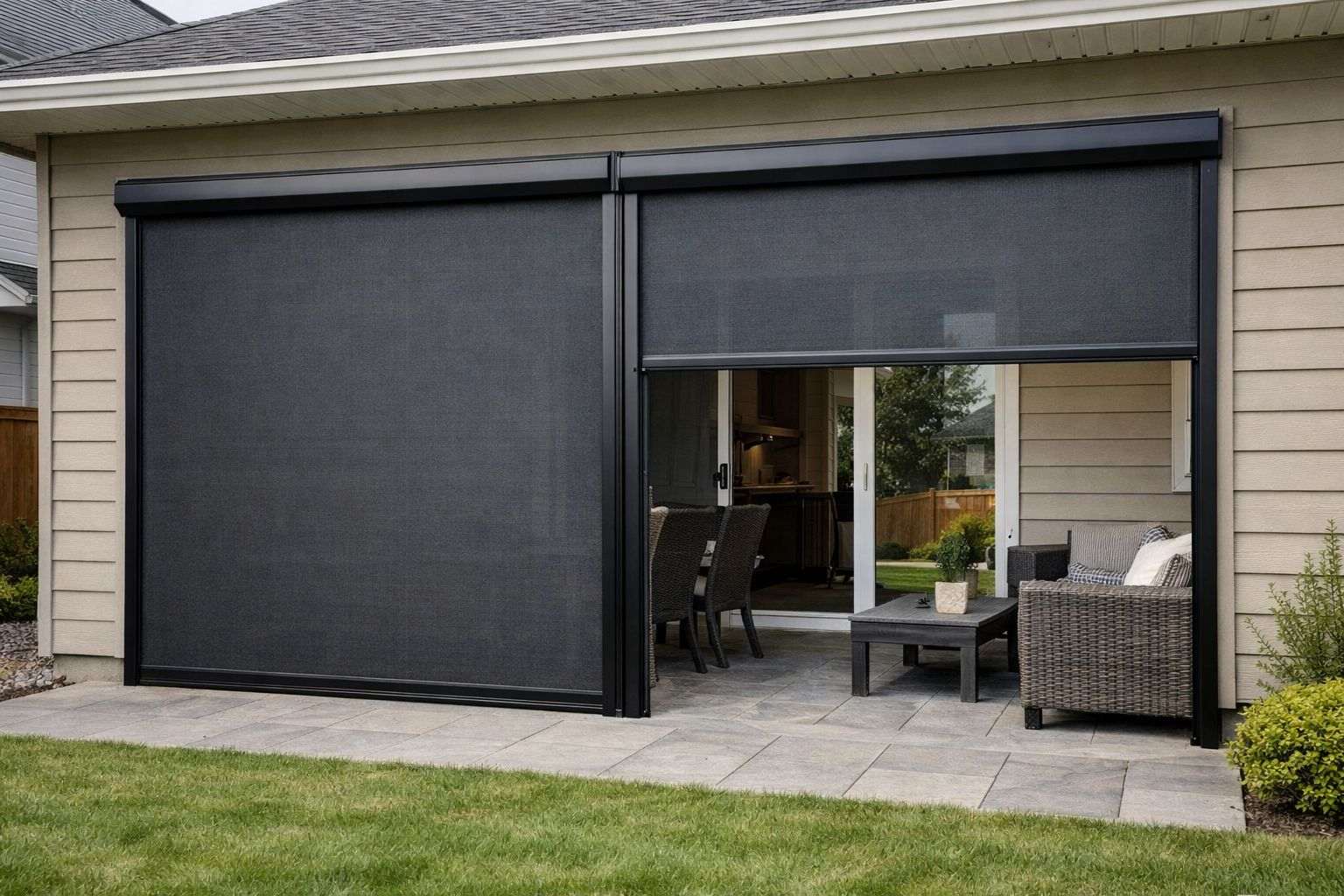
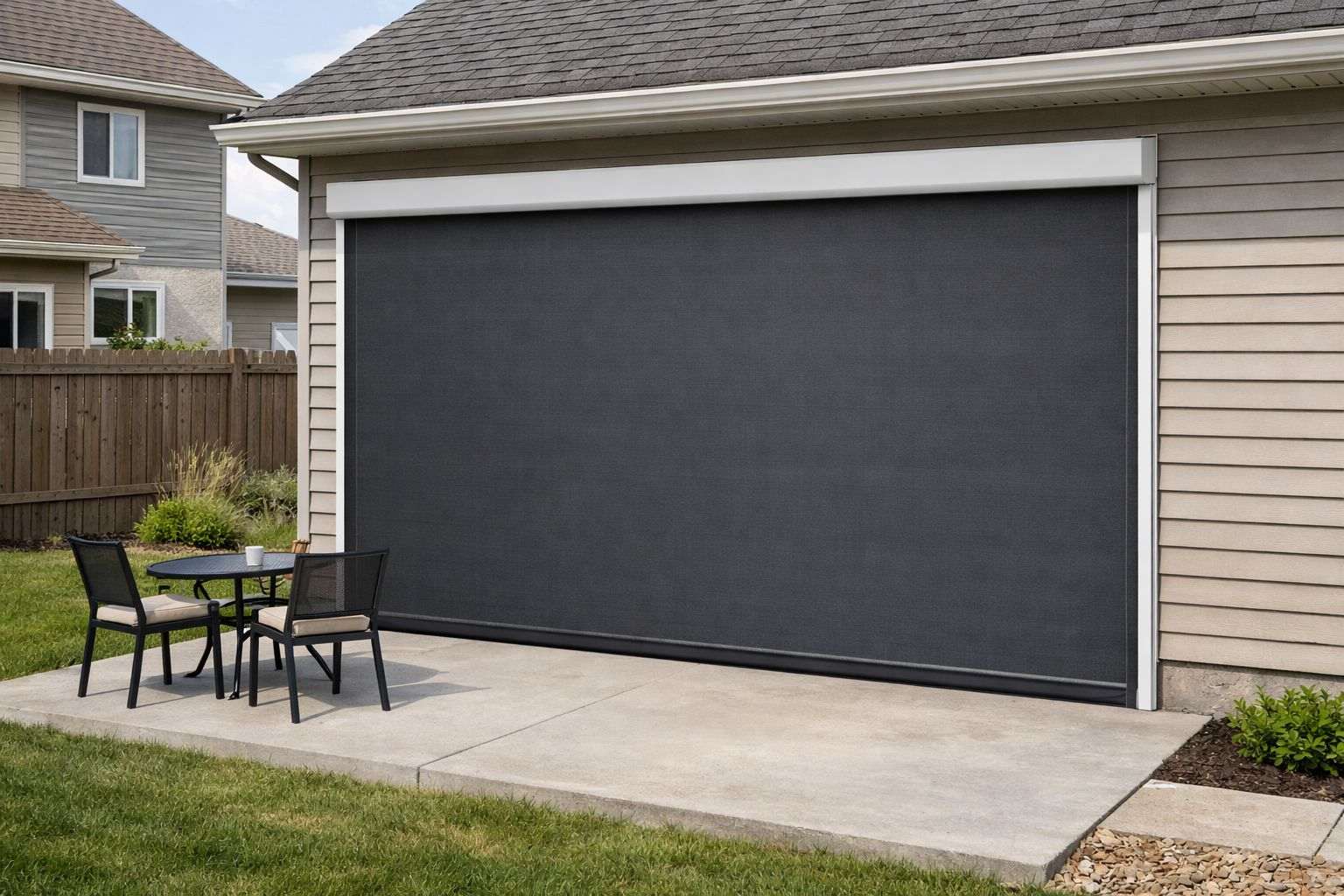
Retractable privacy screen lowered between the columns of a residential front porch

Porch Privacy Screens: Sit on Your Porch Without the Whole Street Watching

Retractable roll-up screens between the porch columns that close the view from the street and cut afternoon glare - then roll away completely.

  • Street-Side Privacy
  • Up to 99% UV Blockage
  • Insect Barrier
  • Retractable When You Want
10-Year Manufacturer Warranty Somfy Motors Free On-Site Measure

At a Glance

A porch privacy screen is a retractable roll-up fabric screen fitted between the columns of a front or back porch. Its fabric edges zip into side tracks on the columns, so it closes the opening edge to edge. Lowered, it blocks the view from the street and cuts afternoon glare; raised, it rolls into a compact housing. Every screen is custom-made, Somfy-motorized and professionally installed across Toronto and the GTA.

Updated

Manufacturer warranty, Somfy motor included
10 years
Installation workmanship warranty
1 year
Motorized as standard
Somfy
On-site measurement
Free

See the Difference

Porch Privacy Screens opening photographed with the screen lowered
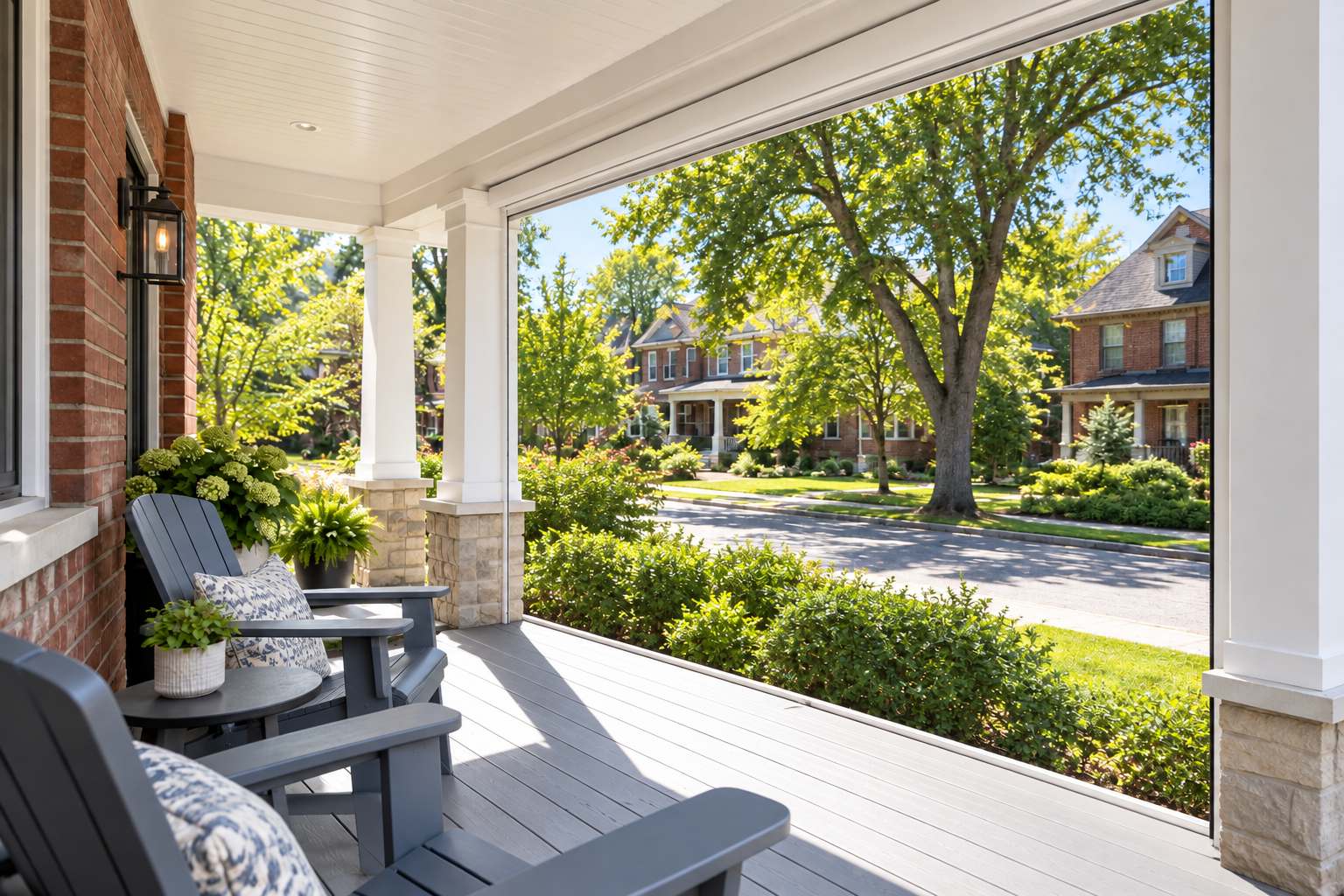
Porch Privacy Screens opening photographed with the screen fully retracted
Without Screen Exposed and overlooked
Screen Lowered Private, shaded and comfortable

Key Benefits for Porch Settings

  • Street and Neighbour Privacy

    Close sightlines from the street, driveway, or adjacent property. A 1% fabric across the porch opening is effectively opaque to anyone outside during daylight, while your view out stays clear.

  • Sun and Glare Control

    West-facing front porches take direct afternoon sun, one of the most uncomfortable exposures for an outdoor seating area. A solar fabric cuts glare and radiant heat, adding real hours of usable time.

  • Clean Fascia Integration

    The housing mounts directly to the existing porch fascia. No exposed brackets or awkward hardware - the system fits the opening as though it had been designed with the porch.

  • No Permits in Most Cases

    A roll-up screen is not a structural enclosure, so most municipalities do not require a permit. The install uses the porch you already have and adds nothing permanent to the building envelope.

Find Your Layout

Common Porch Screen Configurations

Front porches and back porches get screened for different reasons, and the layout follows from that.

Book a Free Measure
  • Front porch with one retractable privacy screen between two columns facing the street Most Common

    Single Bay, Front Porch Facing Street

    One screen between two front columns.

  • Wide front porch with two retractable privacy screen bays between columns

    Two-Bay Front Porch

    Two screens, one per bay, on a wider front porch with three columns.

  • Covered back porch with a wide retractable privacy screen across the opening

    Back Porch, Full Opening

    A single or split screen across the full back porch opening.

  • Porch opening with a dual-roller system combining a privacy screen and an insect screen

    Privacy + Insect Dual System

    A solar privacy screen on one roller for daytime sun and privacy, plus a fine insect mesh on a second roller for evening use, both sharing the same header space.

Somfy-Motorized as Standard

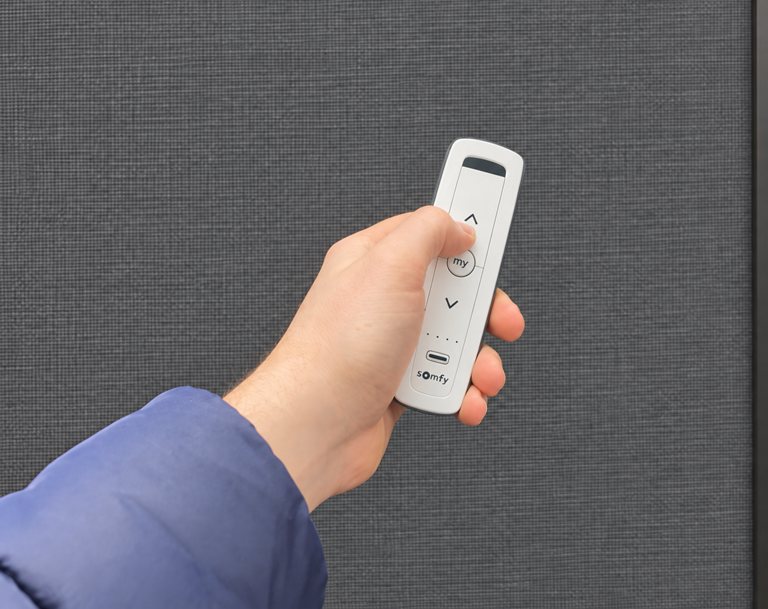
Every screen runs on a Somfy motor, so it raises and lowers at the touch of a button.

Prefer a hand crank? Manual operation is available on request for small, easy-to-reach openings. Manual vs motorized

Why Homeowners Choose Privacy Shade

  • Column-Exact Fit

    Measured between column faces, round columns included

  • Certified Somfy Installer

    Genuine Somfy motors with full factory warranty

  • Dual-Roller Capable

    Privacy and insect screens can share one header

  • Free On-Site Measurement

    No-obligation visit before anything is ordered

How Porch Screens Work

The screen drops from the fascia between the columns and lands on the porch floor, then rolls back into the housing when you want the porch open to the street again.

  1. Roll Down

    Lower the screen between the porch columns.

  2. Close the View

    The porch stops being on display to the street.

  3. Cut the Glare

    Solar fabric takes the edge off afternoon sun.

  4. Roll Up

    Retract into the housing under the fascia.

Retractable porch privacy screen partially lowered between two columns

Stops Anywhere

The screen can be locked at any intermediate position - half down for shade, fully down for privacy.

Built for Outdoor Living in the GTA

Engineered for Ontario conditions, with sensible limits we are upfront about.

  • Wind Resistant

    Column-mounted side channels hold the fabric steady. Capacity follows opening size and fabric openness - commonly around 160 km/h at porch-width openings.

  • Rain Protection

    With the porch roof above, a lowered screen cuts most of the blowing rain that would otherwise reach the seating.

  • UV Protection

    Depending on the fabric chosen, screens block up to 99% of UV - the difference on a west-facing front porch is immediate.

  • Spring to Fall Use

    A screened porch stays comfortable well into the shoulder seasons across Toronto and the GTA.

  • Durable Materials

    Marine-grade anodized or powder-coated aluminium resists corrosion through freeze-thaw cycles.

  • Low Maintenance

    Fabrics wipe clean and the hardware is built to need very little ongoing attention.

Toronto & the GTA

Why Porches Are the Easiest Application We Screen

A porch arrives with everything a retractable screen needs: a solid fascia to carry the housing, columns to take the side channels, and a defined floor for the bottom bar to land on. Very little has to be worked around.

Across Toronto and the GTA that predictability is why porch projects are among the most straightforward we quote - on most porches we know how the system will mount from the moment we see the opening.

See Common Configurations
Deck privacy screens

Hardware That Tucks Under the Fascia

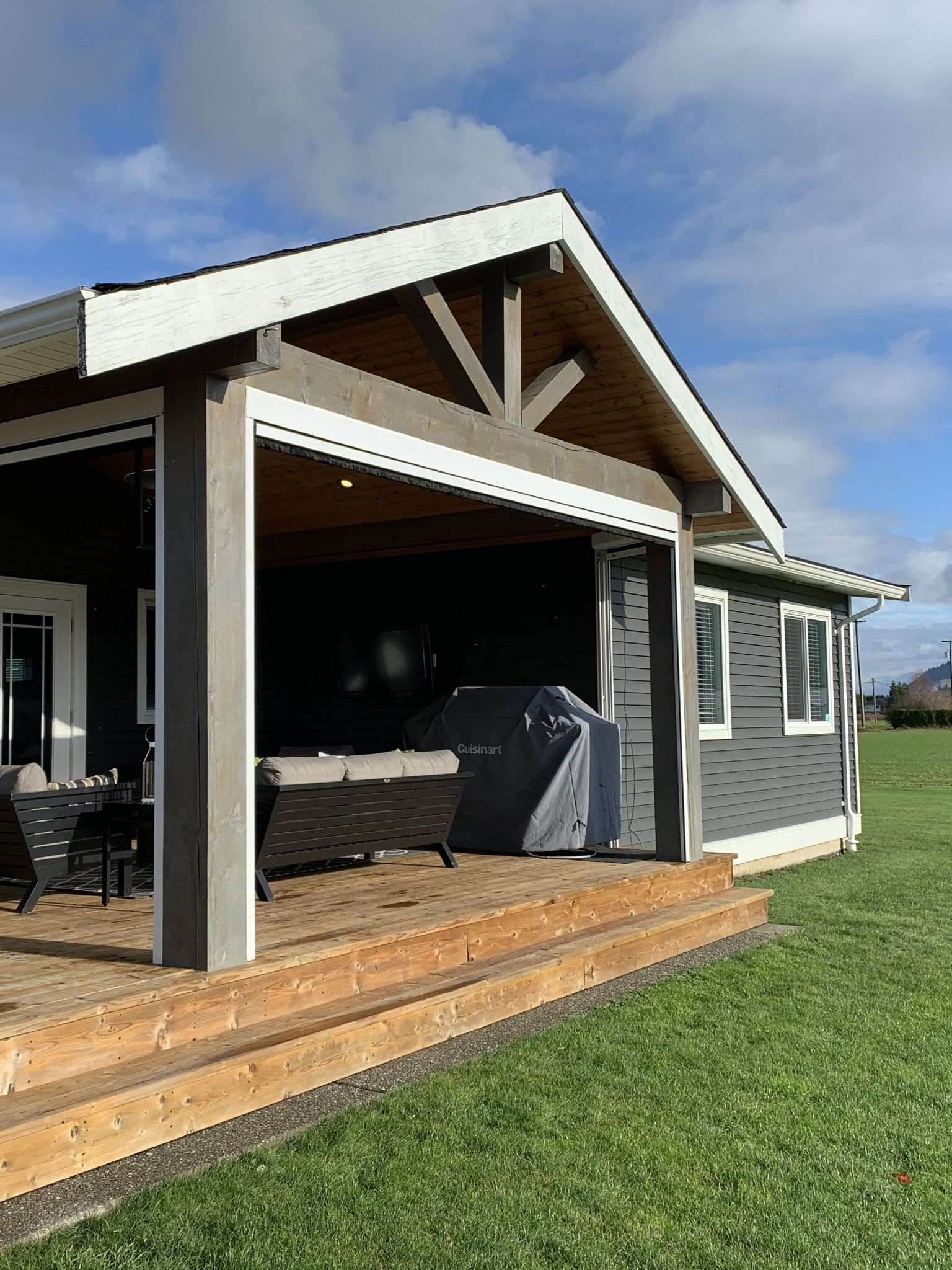
Retracted, all that shows is a slim horizontal profile at the top of the opening and the channel lines on the columns - tidier than roller blinds and considerably more deliberate than most DIY solutions.

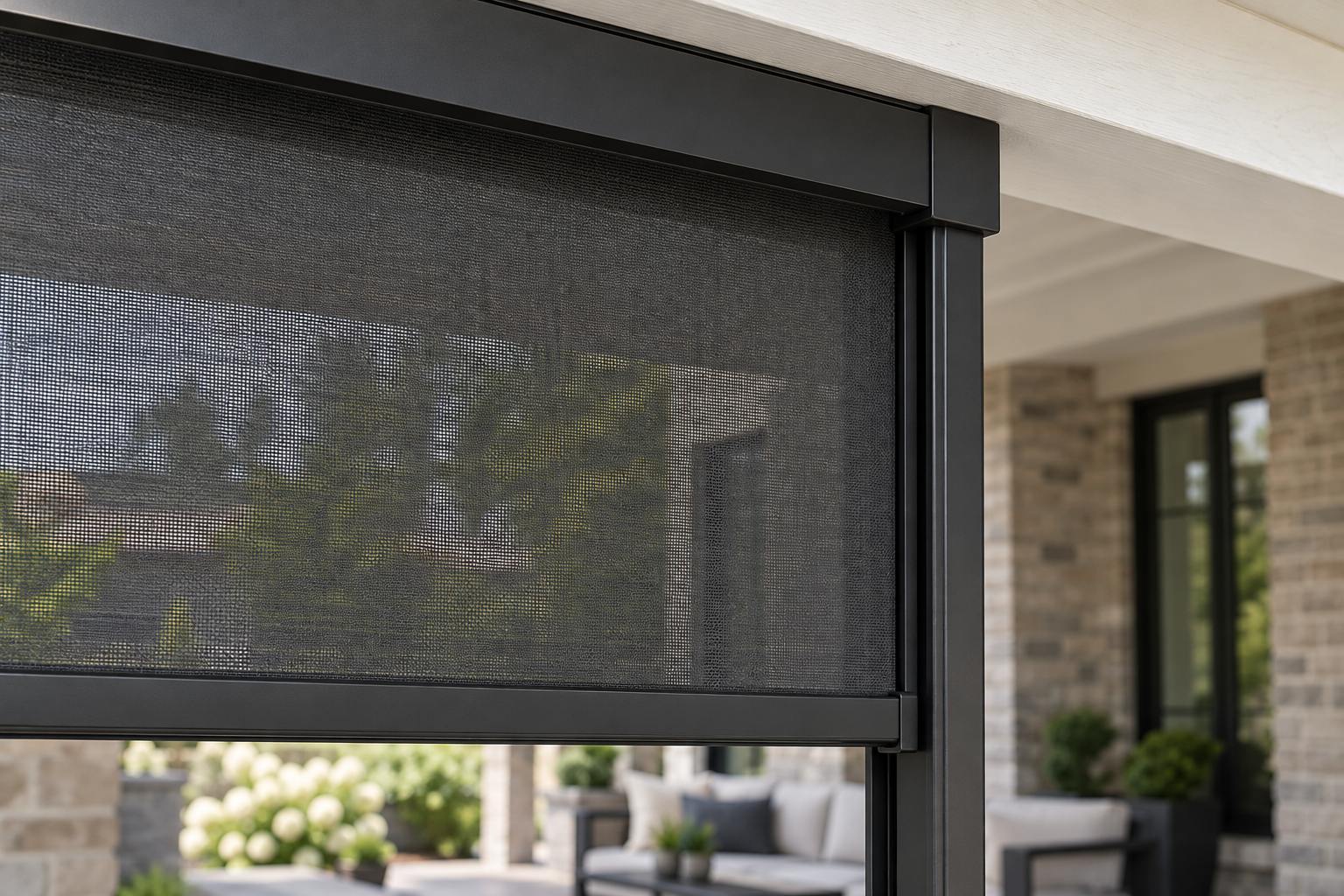
Close-up of the aluminium housing, side guide channel and fabric of a retractable privacy screen
  • Fascia-Mounted Housing

    Sits neatly under the existing porch fascia with no exposed brackets.

  • Column Side Channels

    Fasten flush to the column face; round columns use a flat adapter plate.

  • Bottom Bar

    Adds weight and stability and lands cleanly on the porch floor.

Available in Standard Colours

Match the housing, side channels and bottom bar to the porch trim or column colour. Hardware finishes are selected separately from fabric colour.

  • White
  • Beige
  • Brown
  • Black

Backed by a 10-Year Manufacturer Warranty

Every system carries a 10-year manufacturer warranty, including the Somfy motor supplied with it, and our installation workmanship is covered for 1 year. Both are provided in writing.

Installation Considerations for Porches

Porches are predictable to work on, but column shape and finish decide the detail. These are the four things we confirm on site.

Porch privacy screen installation showing fascia mounting and column channel details
  • Fastening to Painted or Decorative Columns

    Side channels fasten to the column face, typically with two or three fasteners per channel on a standard-height porch, using hardware appropriate to the material - wood, composite, vinyl or aluminium. On decorative painted columns we drill cleanly and touch up around the fastener points. The channels sit flush to the column so the visual impact stays minimal, and if the system is ever removed the holes patch and paint easily.

  • Round and Tapered Columns

    Round and tapered columns are very common on older and craftsman-style homes. For round columns we use a flat adapter plate that wraps the circumference to give the channel bracket a flat surface to land on - a standard part of the install, not an unusual modification. For tapered columns the channel mounts to the flat front face of the taper at the top and bottom of the screen path. We measure the column geometry on the site visit and specify the approach in the quote.

  • Privacy and Insect Screens in One Header

    Solar privacy fabrics are woven for UV and heat performance, not insect exclusion - the weave openings are too large to stop small insects. Where evening insect control matters, a fine-mesh screen on its own roller can share the same header space as the privacy screen in a dual-roller configuration. The two operate independently: solar screen for daytime sun and privacy, insect screen after dark. This is the recommended setup for back porches used in the evening.

  • Partial Coverage and Split Panels

    Screens are built to the full width of the opening - we do not install a narrower screen and leave gaps at the sides. Where you want an opening for ventilation or access, the screen can be locked at any intermediate position rather than run fully down. Alternatively a split two-panel install lets you leave one panel retracted while the other is deployed, effectively opening half the porch while the other half stays screened.


Fabric Options for Your Space

Each fabric performs differently across privacy, view-through, airflow, and UV blocking. We help you choose the right option for the way the space is used.

TuffScreen

Insect & weather protection
45% Openness

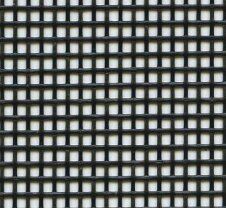
Heavy-duty insect mesh with maximum airflow. Neighbours can see through clearly, so privacy is not a feature of this fabric.

Privacy Low
View Through High
Airflow Maximum
UV Blocking 55%

45% Openness

Recommended:

  • Screened-in porch
  • Cottage deck
  • Gazebo ventilation
View Fabric Details

SunTex 90

Solar & light control
10% Openness

Balanced solar screen that cuts heat and glare while preserving reasonable outward visibility from inside the space.

Privacy Some
View Through Medium
Airflow Low
UV Blocking 90%

10% Openness

Recommended:

  • Sun-exposed patio
  • West-facing deck
  • Open backyards
View Fabric Details

SunTex 95

Best all-around choice
5% Openness

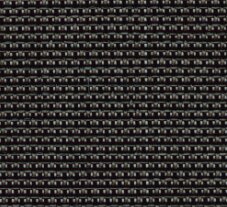
Our most popular fabric with solid daytime privacy, excellent UV blocking, and a comfortable filtered-light quality inside.

Privacy High
View Through Low
Airflow Minimal
UV Blocking 95%

5% Openness

Recommended:

  • Backyard patio
  • Pergola enclosure
  • Residential deck
View Fabric Details

SheerWeave 4800

Maximum privacy
1% Openness

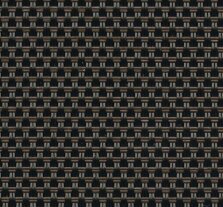
Near-opaque daytime privacy with softly diffused interior light. Neighbours cannot make out occupants or furnishings.

Privacy Maximum
View Through Minimal
Airflow None
UV Blocking 99%

1% Openness

Recommended:

  • Urban patio
  • Balcony privacy
  • Street-facing porch
View Fabric Details

Soltis Proof 502

Day & night privacy
0% Openness

Fully opaque fabric that provides complete visual blackout and total weather enclosure from either side, day or night.

Privacy Maximum
View Through None
Airflow None
UV Blocking 100%

0% Openness

Recommended:

  • Day/night privacy
  • Complete blackout
  • Weather protection
View Fabric Details

PanoramaFR

Preserve your view
0% Openness

Near-clear enclosure that preserves your view while blocking weather and UV. Fire rated.

Privacy None
View Through Maximum
Airflow None
UV Blocking <98%

0% Openness

Recommended:

  • Waterfront / scenic view
  • Weather enclosure
  • Fire-rated applications
View Fabric Details

Porch Privacy Screen FAQs

Can I screen a front porch that faces directly onto the street?

Yes, and it is one of the most satisfying porch projects because the change is so obvious. A single screen between the front columns turns a decorative front porch into a space you can actually sit and read in without an audience.

SheerWeave 4800 at 1% openness is the usual choice for street-facing porches: effectively opaque from outside during daylight, while the outward view from the porch stays clear.

Can I enclose my porch with retractable screens?

Yes. A zip screen between each pair of columns turns the porch into a retractable enclosure. Choose PanoramaFR clear vinyl to keep the view while blocking wind and rain, TuffScreen to keep bugs out with the breeze still coming through, or a privacy fabric on the street side. A dual-roller setup puts clear vinyl and insect mesh on the same opening so you can switch between them.

It is a three-season enclosure: it shelters the porch from wind, rain and cool evenings, but it is not insulated like a glassed-in sunroom. When you want an open porch again, every screen rolls up into a slim housing under the fascia.

Are retractable screens better than porch privacy shutters?

They solve the problem differently. Porch shutters and fixed louvred panels stay in place all the time, so they change the look of the house and block the breeze and the view even when you do not need privacy. A retractable screen covers the opening only when it is lowered, then rolls up into a slim housing under the fascia so the porch looks open again.

A screen also covers the full opening from floor to ceiling in one piece, cuts glare and UV, and with a Somfy motor it goes up and down from a remote or phone. For most porches that people want to use some of the time and leave open the rest, a retractable screen is the more flexible choice.

Will a porch screen stop rain blowing in?

It stops most of it. Under the porch roof, rain only reaches the floor and the furniture when wind drives it in from the side, and a lowered screen closes that side. Soltis Proof 502 and PanoramaFR clear vinyl are waterproof and block rain completely, while the mesh fabrics cut most of it and still let air through. Raise the screens in severe storms, or add a wind sensor to do it automatically.

What fabric handles insects versus privacy on a porch?

Standard solar privacy fabrics at 1%, 5% and 10% openness are woven for UV and heat performance rather than insect exclusion, and the weave openings are too large to stop small insects.

For insect control you want a fine mesh - TuffScreen at 45% openness is the dedicated option in our range. It can run on its own roller and share the same header space as a solar privacy screen in a dual-roller configuration, with the two operated independently. That is the recommended approach for back porches where evening use is a priority.

Will a porch screen damage my columns?

Side channels are fastened to the column face with two or three appropriate fasteners per channel on a standard-height porch, chosen for the column material. On decorative painted columns we drill cleanly and touch up the paint around the fastener points.

The fasteners are small and the channels sit flush to the column, so the visual impact is minimal. If the system is ever removed, the holes patch and paint easily.

Can screens fit between columns that are round or tapered?

Yes. Round columns are common on older and craftsman-style homes, and we use a flat adapter plate that wraps the column to give the channel bracket a flat mounting surface. It is a standard part of a round-column install rather than a special modification.

For tapered columns the channel mounts to the flat front face of the taper at the top and bottom of the screen path. We measure the geometry during the site visit and specify the approach in the quote.

How does the porch look when the screen is retracted?

Retracted, what shows is the housing running horizontally across the top of the opening and the side channel profiles running vertically on the column faces. Both are powder-coated aluminium in white, beige, brown, black or silver, with custom colours to order.

From the street the result is a tidy horizontal profile tucked under the fascia - less obtrusive than a set of roller blinds and considerably more deliberate-looking than most DIY screen solutions.

Is a porch screen different from a patio screen?

The system itself is identical - same housing, same side channels, same fabric options, same motors. The difference is entirely in the installation planning. Porches offer clean structural starting points in the fascia, columns and defined floor, which makes the install very predictable. Patios present more varied mounting surfaces and sometimes need structural preparation first.

Can the screen cover only part of the opening?

The screen is built to the full width of your opening - we do not fit a narrower screen and leave gaps at the sides. For occasional ventilation or access, the screen can be locked at any intermediate position rather than run fully down.

A split two-panel installation is the other option: leave one panel retracted while the other is deployed, so half the porch opens while the other half stays screened.

Do I need a permit for a porch screen?

In most municipalities, no. A retractable roll-up screen is not a structural enclosure - it adds nothing permanent to the building envelope and uses the porch structure already in place. Requirements do vary between municipalities, so if your property is in a heritage district or under a specific bylaw it is worth confirming locally before proceeding.

Can neighbours see in at night?

Solar screen fabrics work by contrast, so the effect reverses after dark: once porch lighting is brighter than the street, people outside can see more than they can during the day. If night-time privacy matters on a front porch, Soltis Proof 502 is the fabric to choose - it is fully opaque and provides day and night privacy.

How long does a porch installation take?

A single-bay front porch screen typically takes about 90 minutes. Two-bay porches and dual-roller systems take longer, and most porch appointments finish within two to four hours. We confirm the expected timing when we quote.

What warranty is included?

Every system carries a 10-year manufacturer warranty, which includes the Somfy motor supplied with it, and our installation workmanship is covered for 1 year. Both are provided in writing.

View All FAQs

Ready to Make Your Porch Private?

Tell us about the opening and the columns, and we will recommend the screen, fabric and operation that fit the porch.