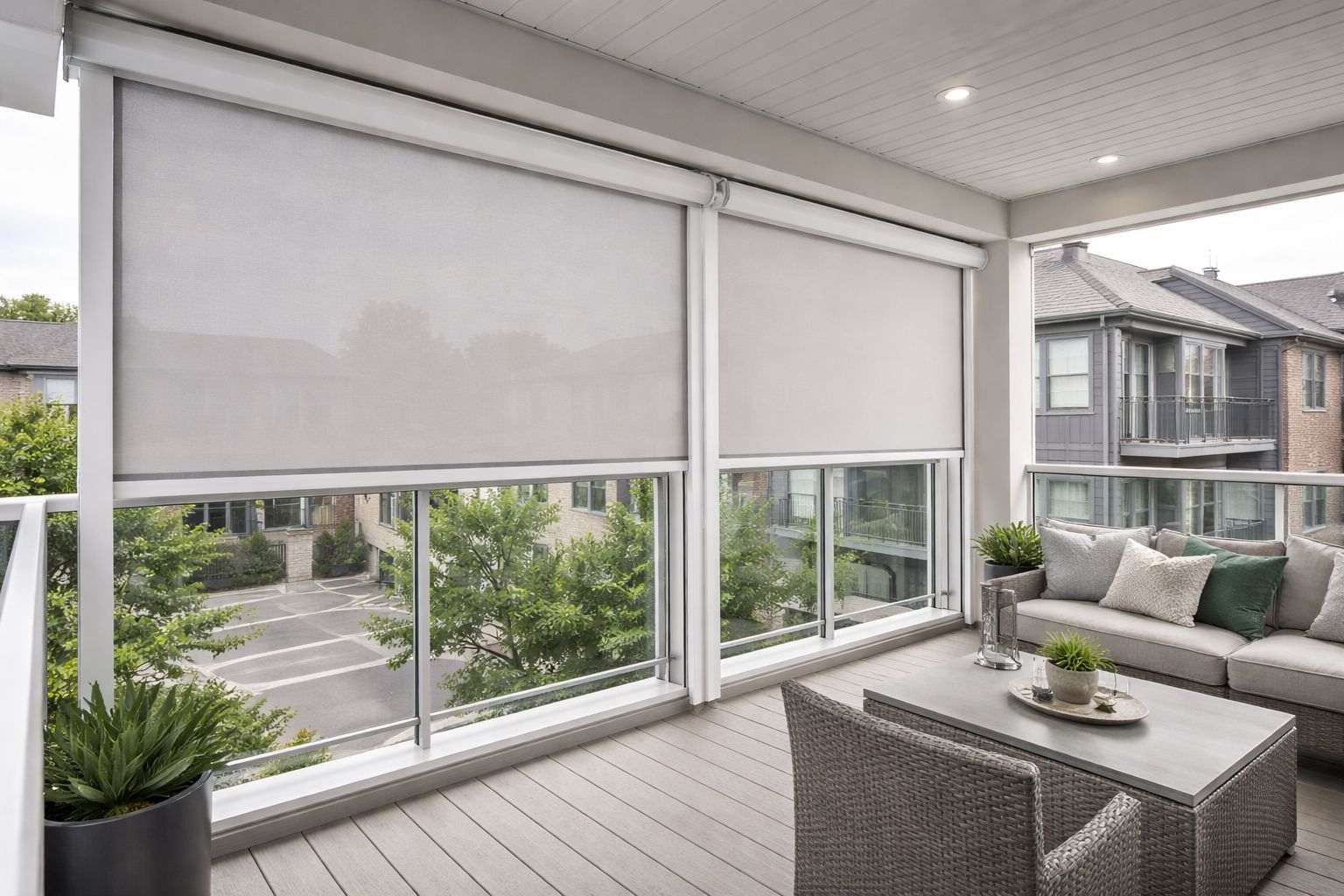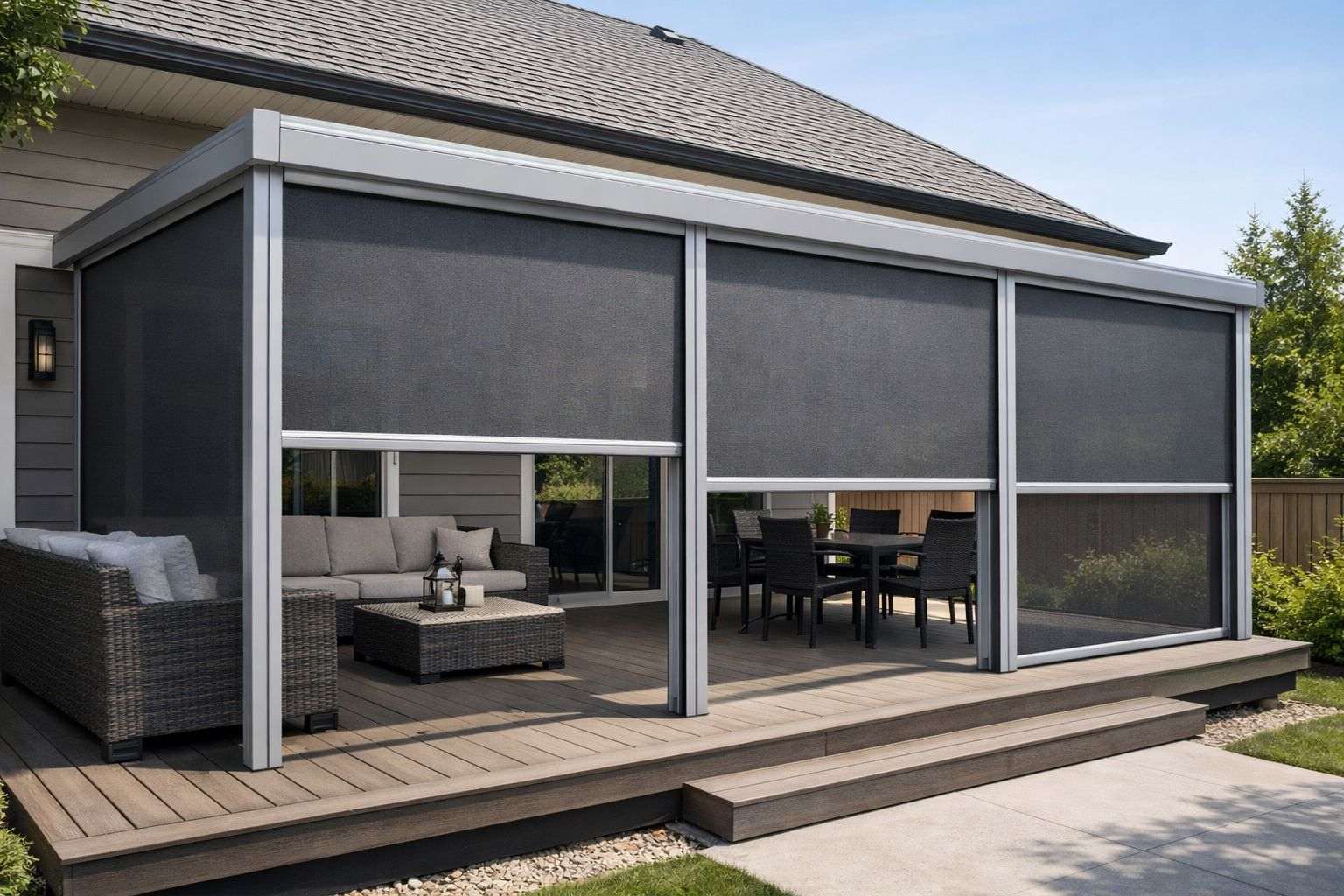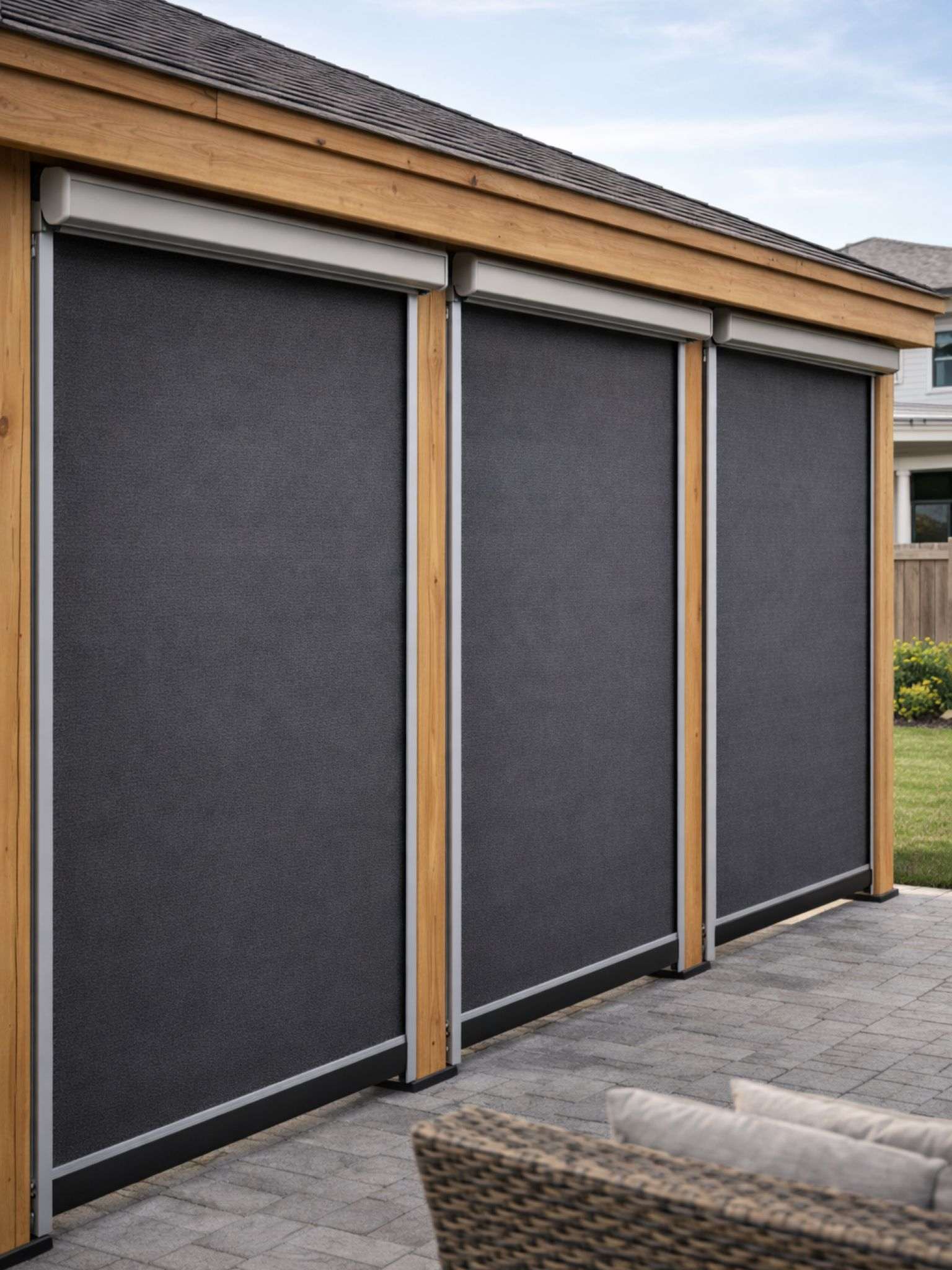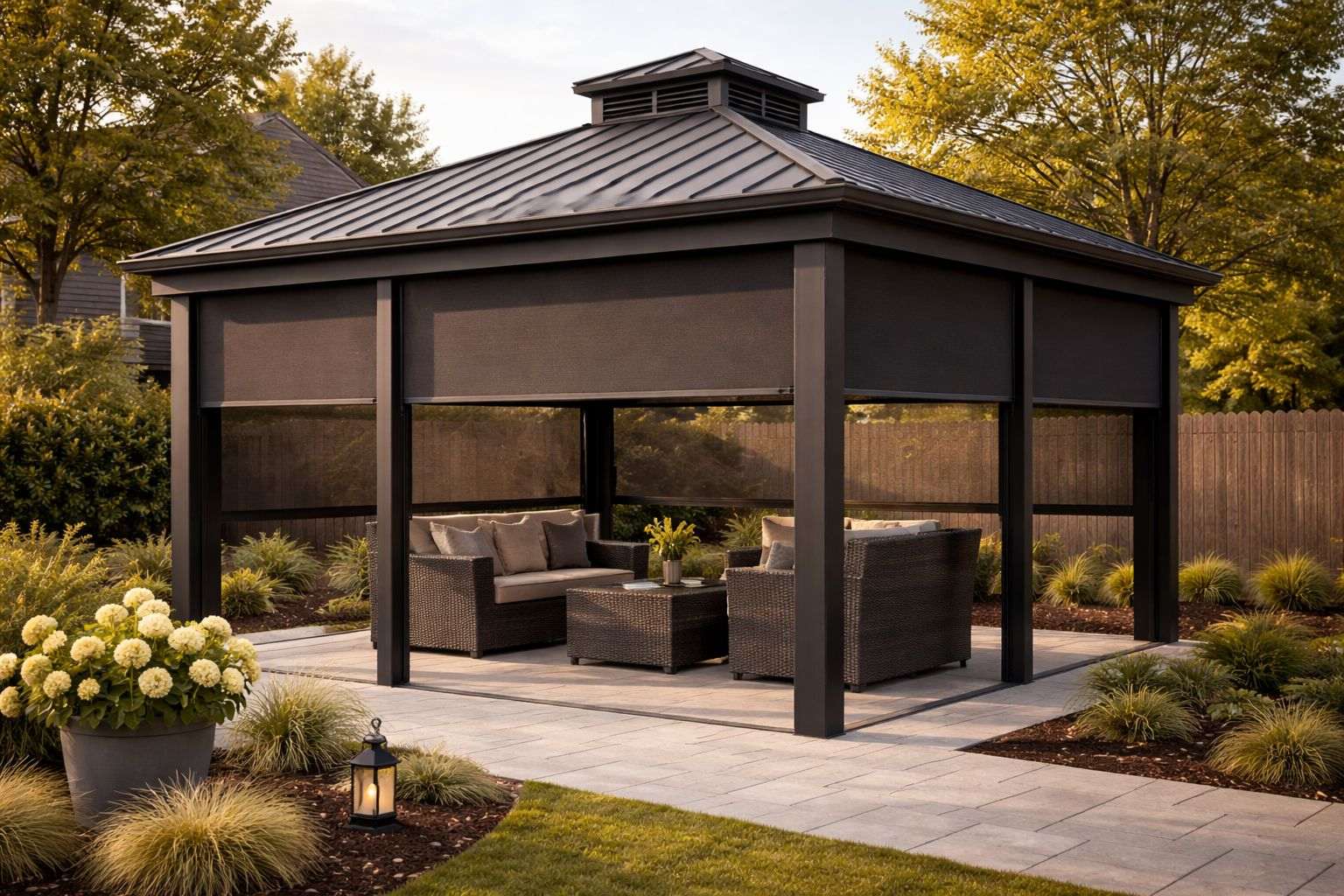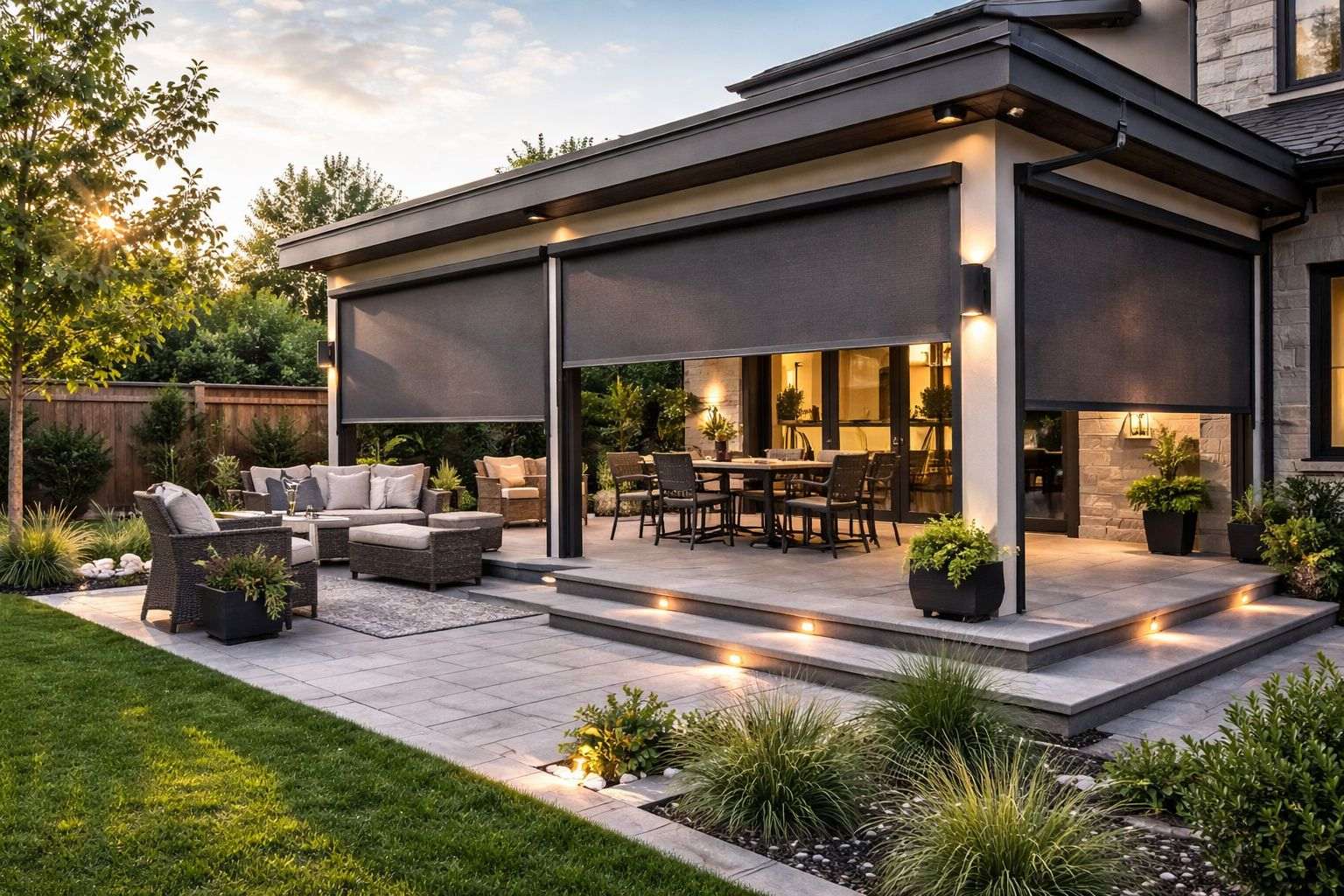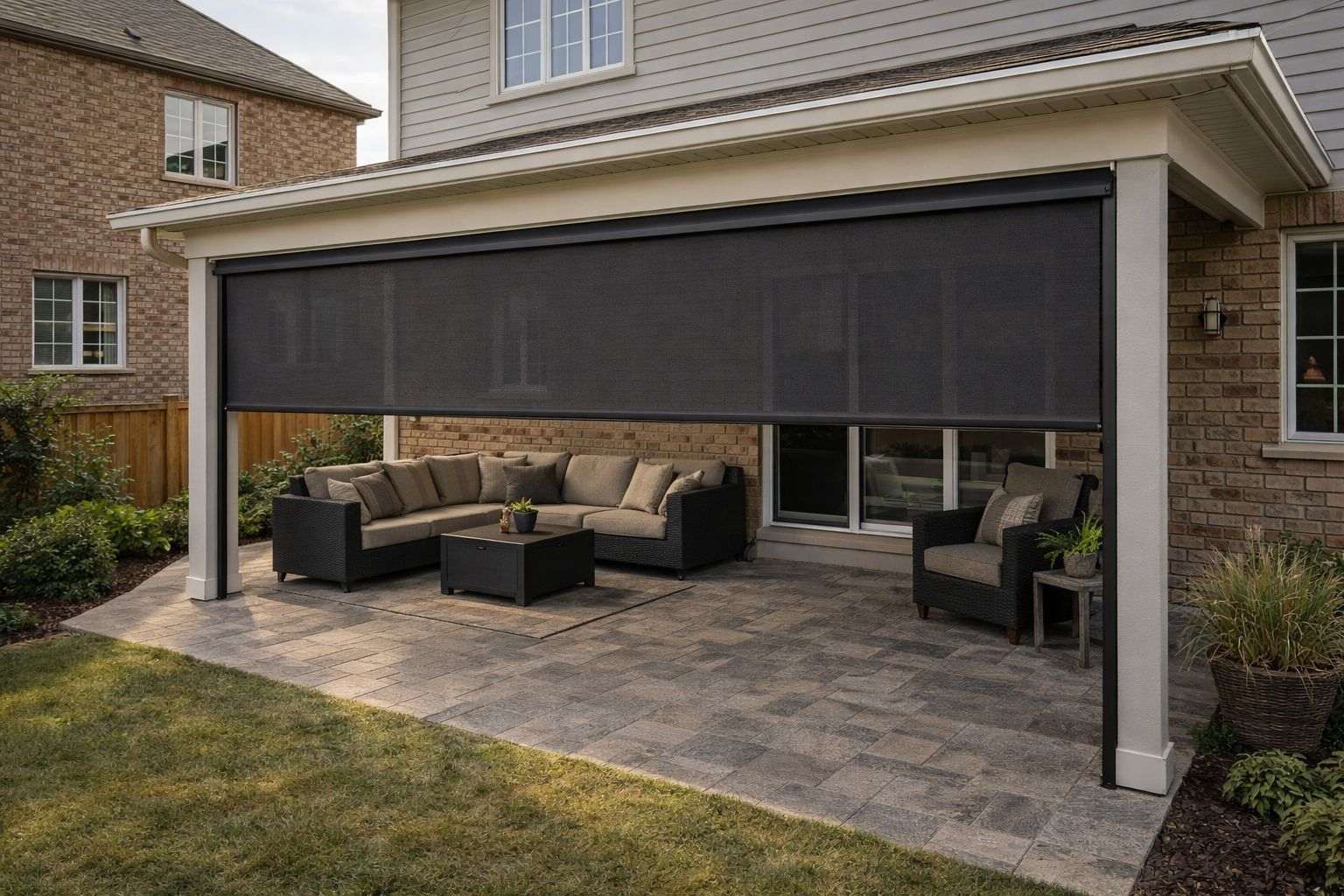
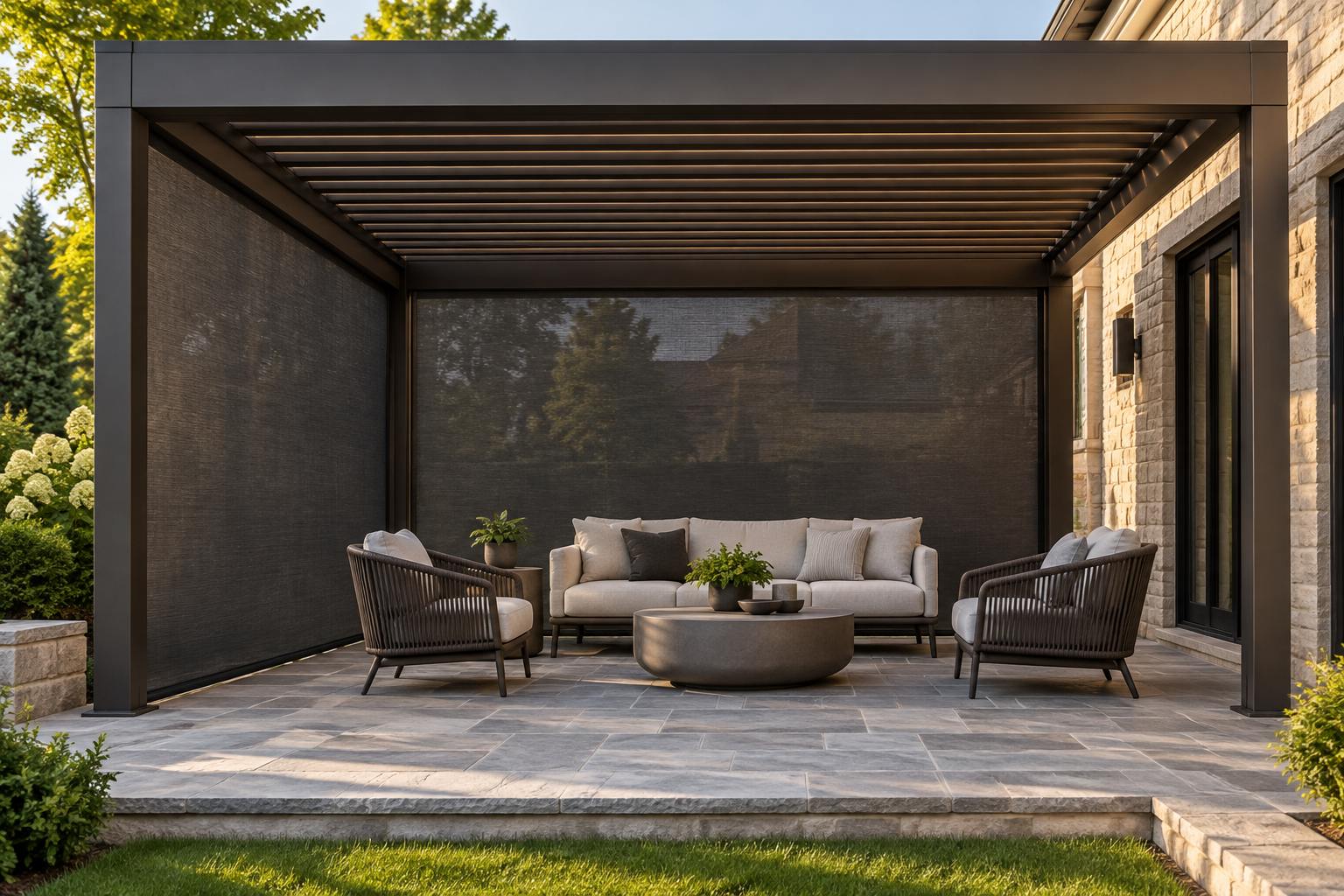
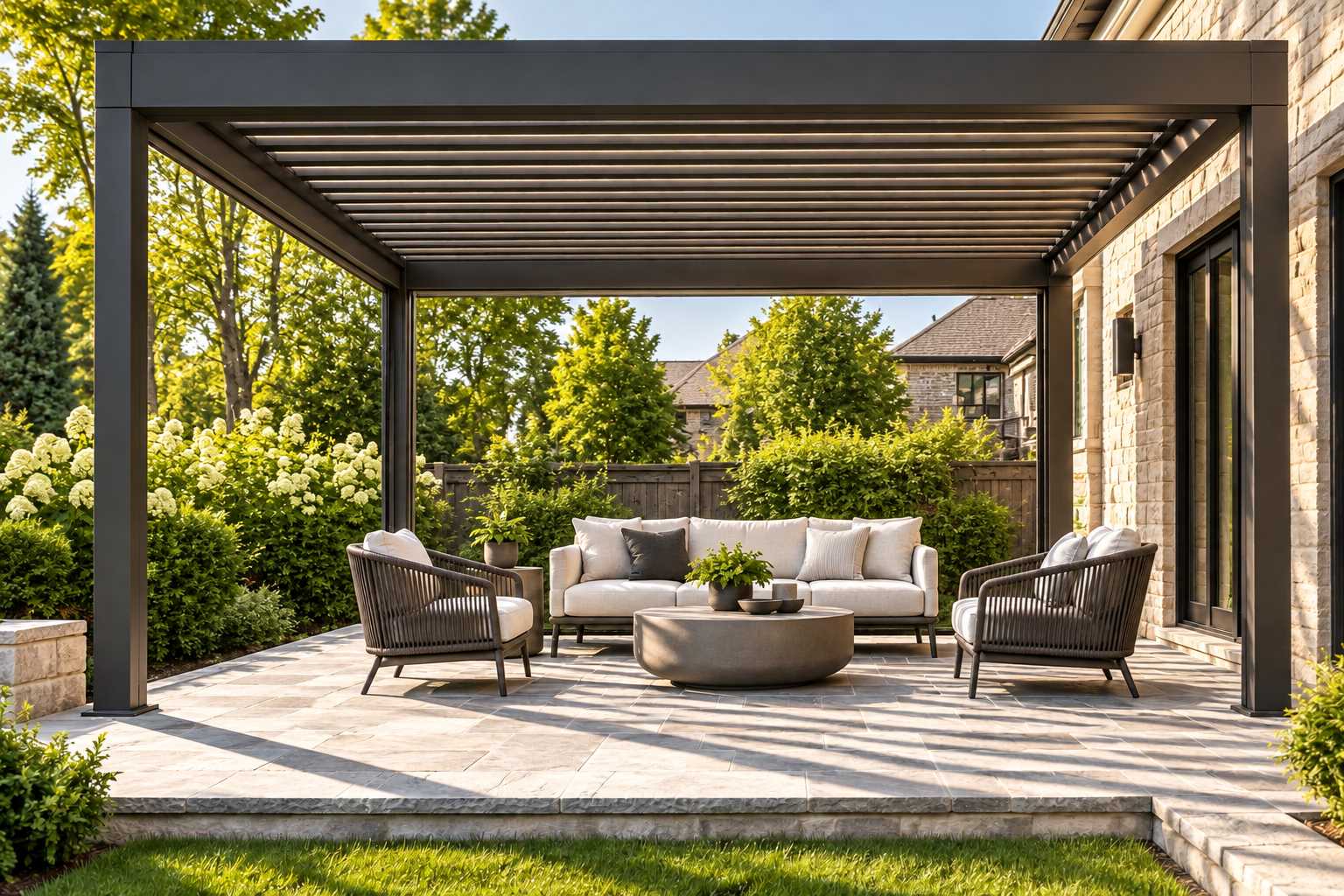
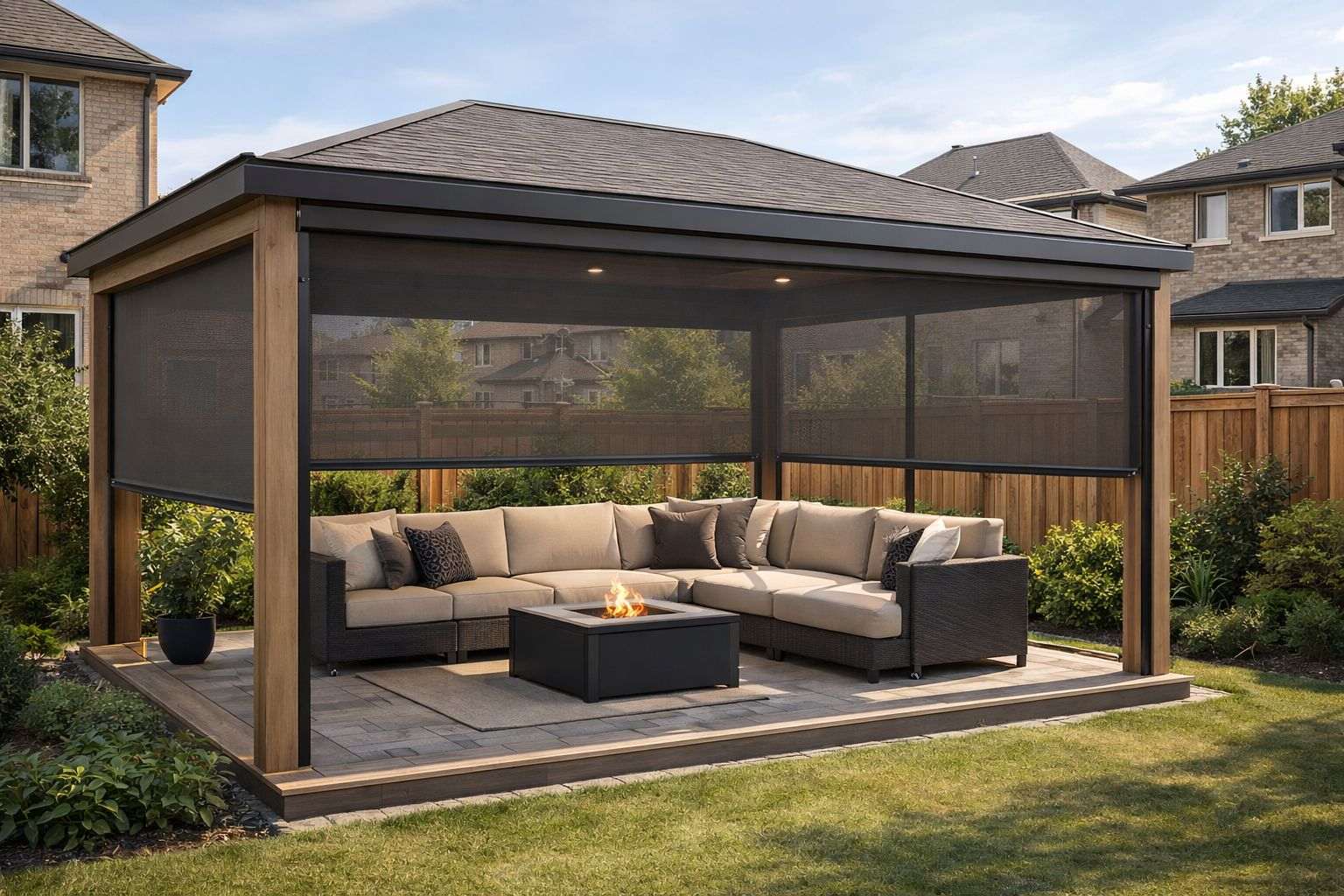
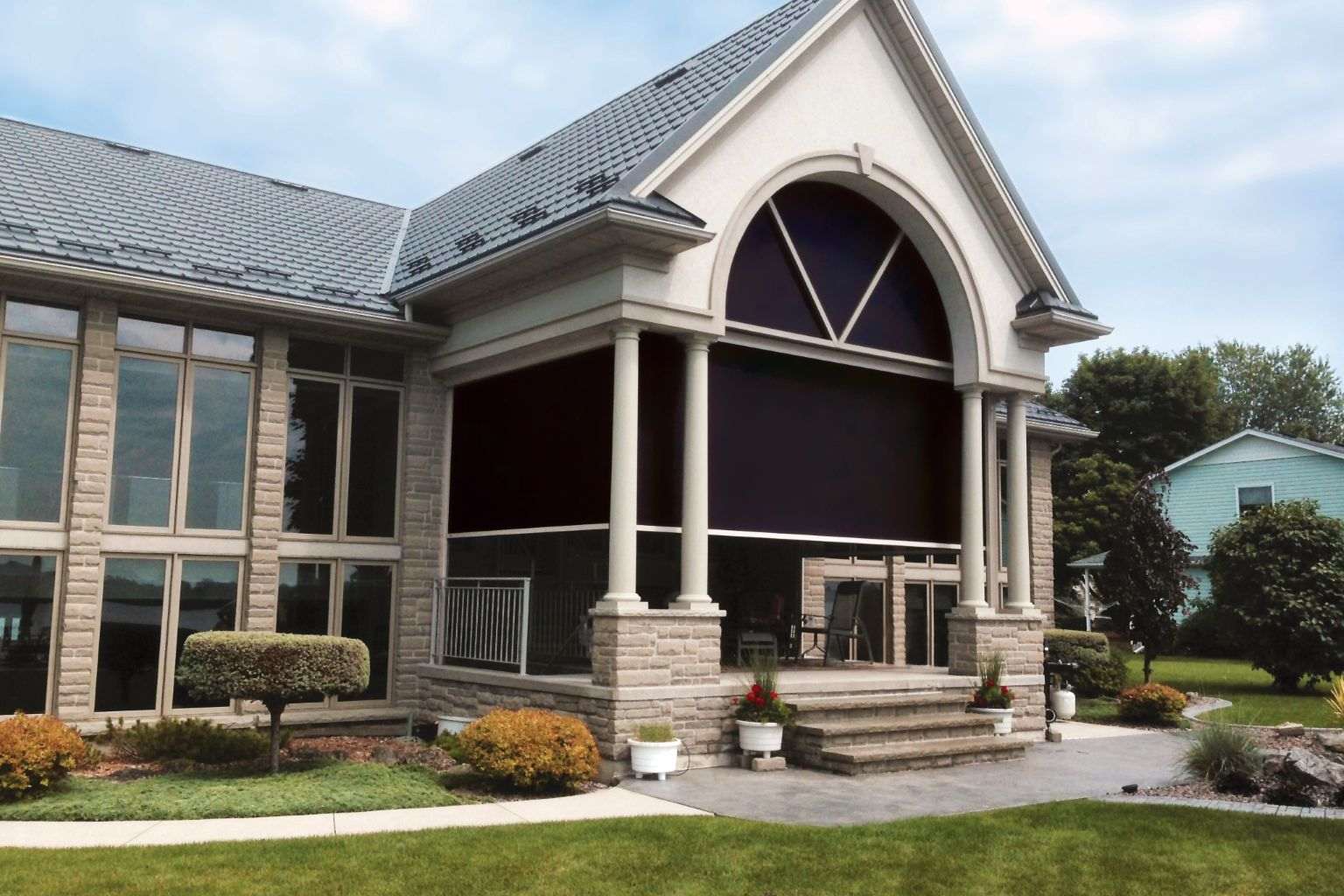
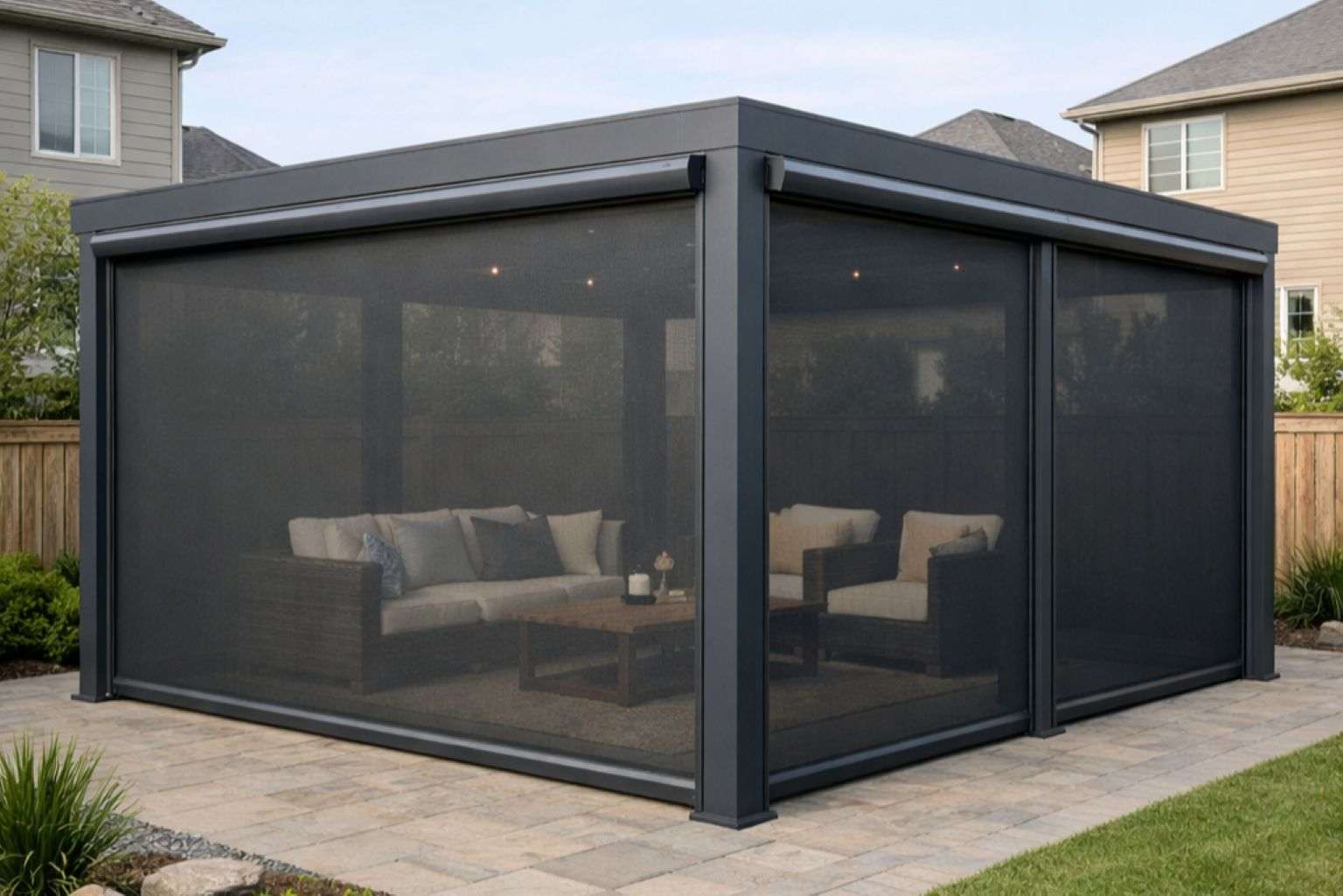
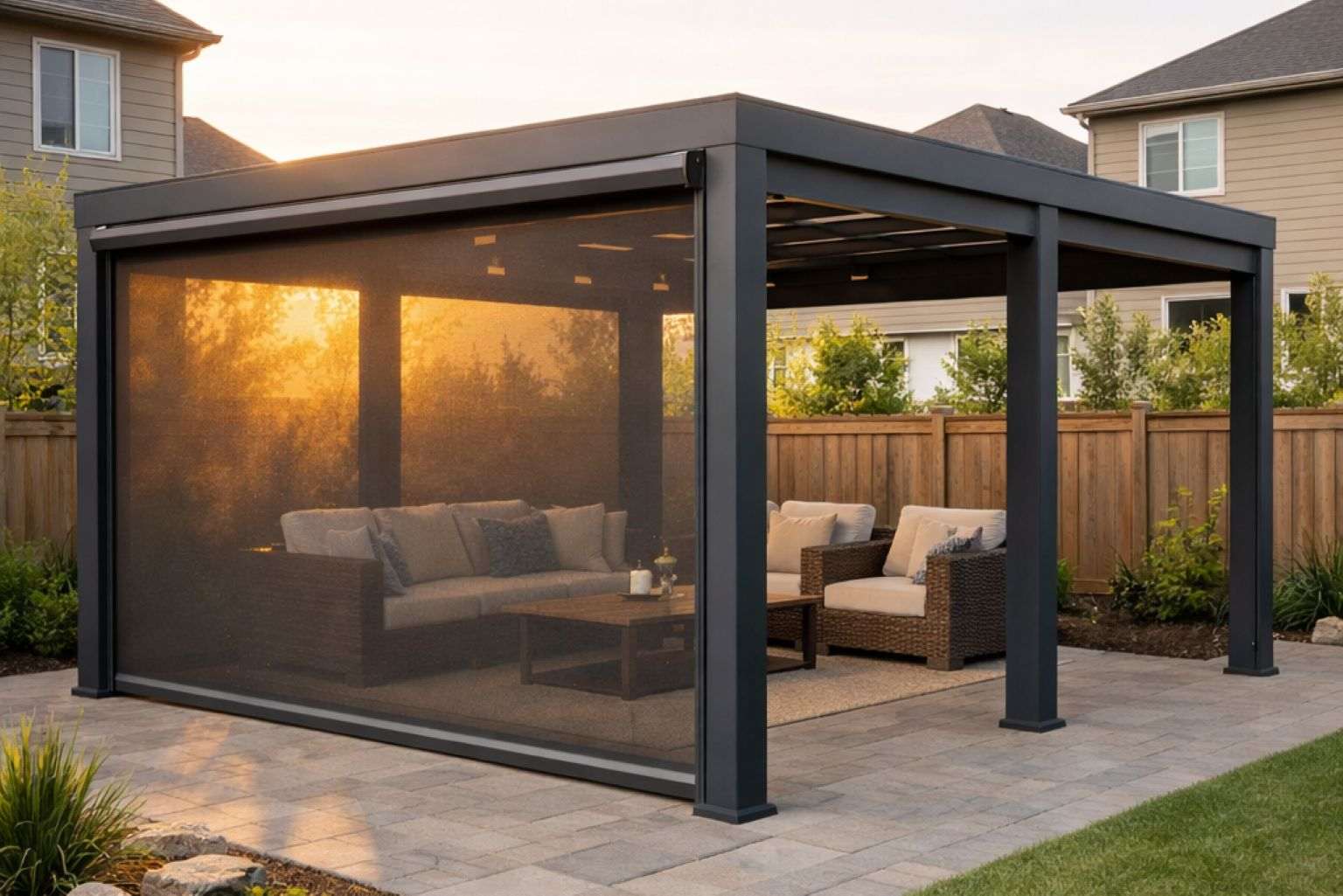
Retractable privacy screens installed between the posts of a backyard pergola

Pergola Privacy Screens: Add Privacy and Shade to Your Pergola

Retractable roll-up screens that bring privacy, shade and wind control to a pergola - without building fixed walls.

  • Bay-by-Bay Privacy
  • Up to 99% UV Blockage
  • Wind Buffering
  • Retractable When You Want
10-Year Manufacturer Warranty Somfy Motors Free On-Site Measure

At a Glance

A pergola privacy screen is a retractable roller screen mounted between two pergola posts. Ours are zip-track screens: the fabric edges zip into the side tracks, so the screen closes the bay edge to edge and stays flat in the wind. Screening only the bays that need it turns an open pergola into a private outdoor room, and each screen rolls away when not needed. Every screen is custom-made, Somfy-motorized and professionally installed across Toronto and the GTA.

Updated

Manufacturer warranty, Somfy motor included
10 years
Installation workmanship warranty
1 year
Motorized as standard
Somfy
On-site measurement
Free

See the Difference

Pergola Privacy Screens opening photographed with the screen lowered
Pergola Privacy Screens opening photographed with the screen fully retracted
Without Screen Exposed and overlooked
Screen Lowered Private, shaded and comfortable

Key Benefits for Pergola Settings

  • Zip-Track Post Integration

    The fabric edges zip into side tracks that mount flush to the pergola posts, so there is no gap at the sides. Surface-mounted or post-routed, the finished result reads as an intentional design element rather than a retrofit.

  • Selective Side Screening

    Screen only the bays facing neighbours or the street and leave the ones with the best view or morning light fully open. You choose the configuration, and panels can be added later.

  • True Outdoor Room Feel

    With screens on three or four bays under a pergola roof, the space becomes a genuine outdoor room - sheltered, private, comfortable - with no permanent construction involved.

  • Sun Angle Management

    Low western sun enters a pergola through the sides, not the top. A screen on the west bay cuts the evening glare that makes pergola dining uncomfortable after 5 pm.

Find Your Layout

Common Pergola Screen Configurations

Most pergolas are screened on some bays and left open on others. Which ones depends on where the exposure and the sun come from.

Book a Free Measure
  • Backyard pergola with privacy screens on two adjacent bays facing neighbouring properties

    Two Bays Facing Neighbours

    The back and one side of a four-post pergola, addressing the two bays that face neighbouring properties while the other two stay open.

  • Pergola screened on three sides creating a private outdoor room open toward the house Most Common

    Three-Side Screening

    Back and both side bays screened, with the bay facing the house left open.

  • Pergola fully enclosed with retractable privacy screens on all four bays

    Full Four-Bay Enclosure

    All four bays screened, with the front panel usually left partially raised for access and lowered when full enclosure is wanted.

  • Pergola with one retractable privacy screen on the west-facing bay blocking late afternoon sun

    Single West-Facing Bay

    Where sun rather than privacy is the problem, one screen on the west bay cuts the worst of the afternoon heat and glare while every other bay stays open.

Somfy-Motorized as Standard

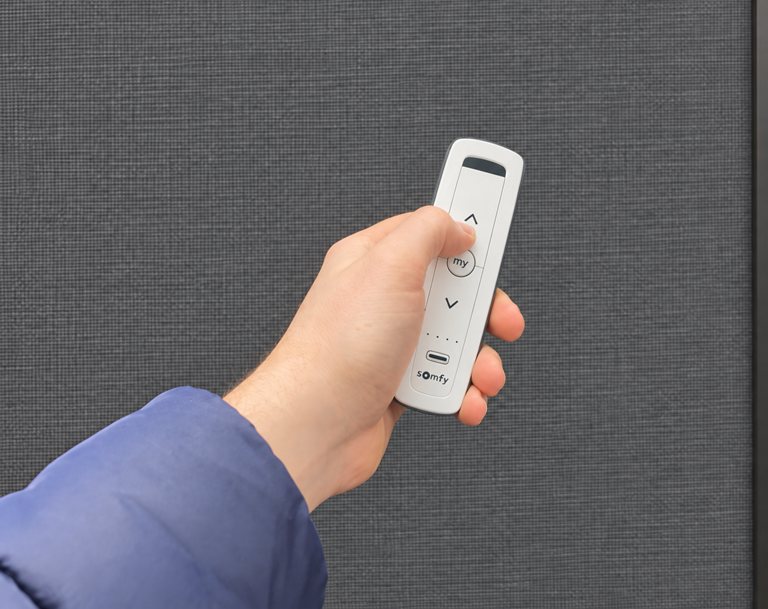
Every screen runs on a Somfy motor, so it raises and lowers at the touch of a button.

Prefer a hand crank? Manual operation is available on request for small, easy-to-reach openings. Manual vs motorized

Why Homeowners Choose Privacy Shade

  • Bay-Exact Sizing

    Measured between post faces, bay by bay

  • Certified Somfy Installer

    Genuine Somfy motors with full factory warranty

  • Grouped Control

    Run every bay together or each one alone

  • Free On-Site Measurement

    No-obligation visit before anything is ordered

How Pergola Screens Work

Each bay carries its own screen. Lower the ones that matter for privacy or sun, leave the rest open, and retract everything into the beam line when the pergola should read as open again.

  1. Lower a Bay

    Drop the screen on the exposed or sun-facing side.

  2. Close the View

    Cut neighbour sightlines through that opening.

  3. Cut the Glare

    Block the low western sun that comes in sideways.

  4. Roll Up

    Retract into the housing under the beam.

Retractable pergola privacy screen partially lowered in one bay

Independent of the Roof

Screens operate separately from a louvered or retractable roof - neither system affects the other.

Built for Outdoor Living in the GTA

Engineered for Ontario conditions, with sensible limits we are upfront about.

  • Wind Resistant

    Post-mounted side channels and a weighted bottom bar hold the fabric taut. Commonly around 160 km/h across the larger bays, and higher on smaller ones.

  • Rain Protection

    With a solid pergola roof above, screens on the sides cut most of the blowing rain that would otherwise reach the seating area.

  • UV Protection

    Depending on the fabric chosen, screens block up to 99% of UV - the side exposure a pergola roof cannot address.

  • Spring to Fall Use

    Screened bays extend comfortable pergola use across the warmer months in Toronto and the GTA.

  • Durable Materials

    Marine-grade anodized or powder-coated aluminium resists corrosion through freeze-thaw cycles.

  • Low Maintenance

    Fabrics wipe clean and the hardware is built to need very little ongoing attention.

Toronto & the GTA

Why Pergolas Screen So Well

Pergolas are one of the cleanest applications for roll-up screens because the structure already exists. The posts and beams define each bay, so a screen fits an opening that was effectively designed for it rather than being improvised onto a flat wall.

It works the same way whether the pergola has a solid roof, a louvered system, a shade sail, or an open lattice top. The roof handles what comes from above; the screens handle what comes from the sides, and each bay can be treated differently.

See Common Configurations
Deck privacy screens

Hardware That Follows the Post Line

The housing tucks under the beam and the channels run down the post faces, so the system reads as part of the pergola frame rather than something added later.

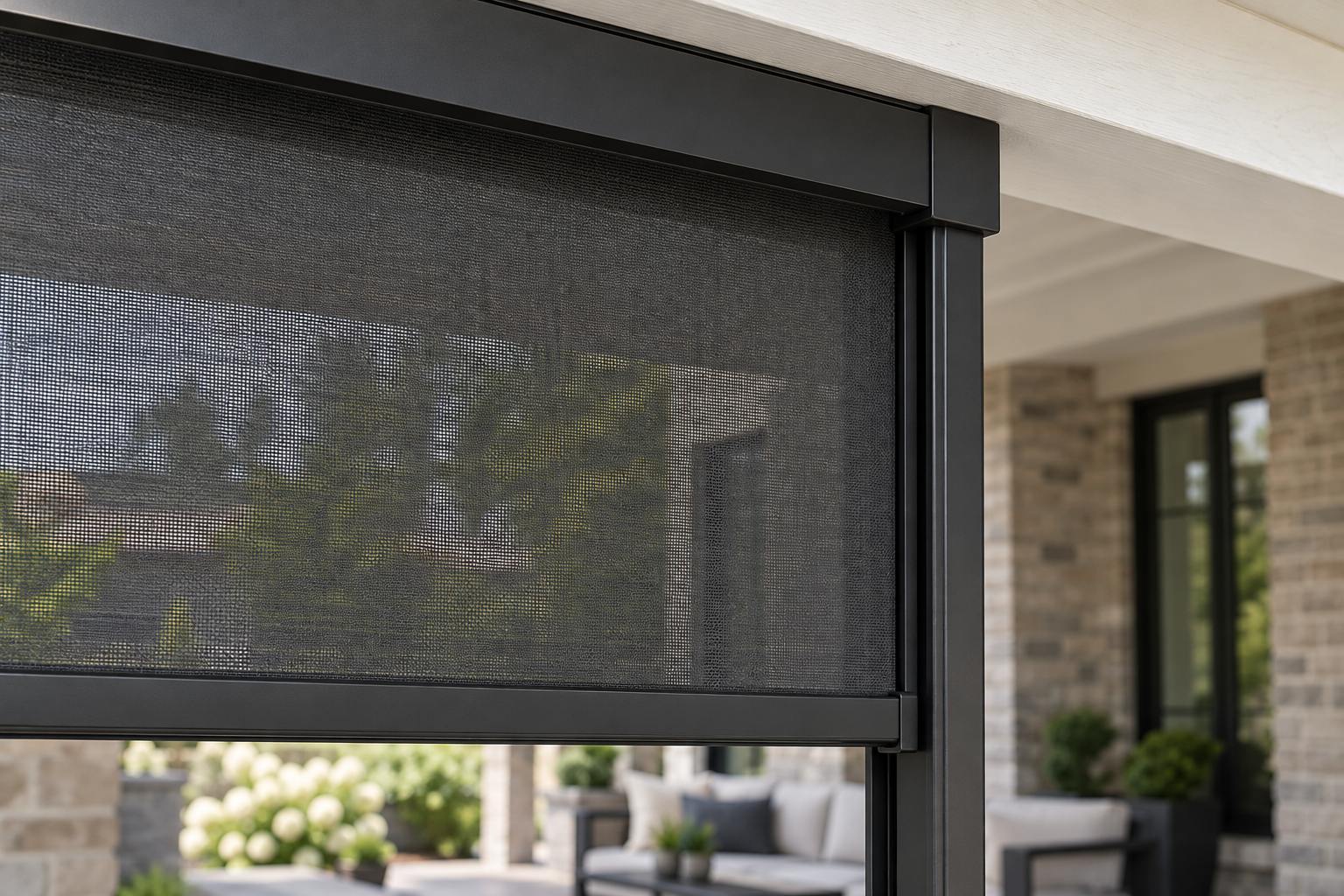
Close-up of the aluminium housing, side guide channel and fabric of a retractable privacy screen
  • Beam-Mounted Housing

    Fits under the beam and is sized to the exact bay width, so nothing overhangs.

  • Zip-Track Post Channels

    Hold the zippered fabric edge. Surface-mounted to the post face, or recessed into a routed channel for a flush finish.

  • Weighted Bottom Bar

    Sits in a bottom track or threshold so wind cannot lift the fabric.

Available in Standard Colours

Match the housing, side channels and bottom bar to the pergola stain or the home's trim. Hardware finishes are selected separately from fabric colour.

  • White
  • Beige
  • Brown
  • Black
  • Silver

Backed by a 10-Year Manufacturer Warranty

Every system carries a 10-year manufacturer warranty, including the Somfy motor supplied with it, and our installation workmanship is covered for 1 year. Both are provided in writing.

Installation Considerations for Pergolas

Pergolas vary enormously in post spacing, height, and beam depth. These are the four details that decide how a bay gets screened.

Pergola privacy screen installation showing post-mounted guide channels and beam header positioning
  • Post Channels vs Surface Mount

    Side channels attach to pergola posts in one of two ways. Surface mounting fastens the channel profile directly to the post face - clean, reversible, and suitable for most post materials. Post routing cuts a shallow channel into the post face and recesses the guide into it, so the channel sits flush with the post surface. Routing gives the most seamless result but needs the right access and tools, and is not suitable for composite or thin posts. We assess post type and your preference on the site visit.

  • Housing Position and Beam Depth

    The housing mounts to the underside of the pergola beam or to a horizontal member spanning the posts at the top of the bay. Beam depth matters: a deep beam of 200 mm or more can partly conceal the housing when viewed from inside the pergola, which gives a very clean finish. A shallow or open-lattice top may leave the housing partly visible - still tidy, but worth discussing at planning. The housing is sized to the exact bay width, so there is no overhang or awkward trimming.

  • Ground-Level Termination

    At the bottom, the bar needs a clean termination at the deck or grade surface. Over a paved pergola floor it rests on the pavers with a small rubber seal that stops wind entering underneath. Over grass or gravel, a bottom track or threshold profile keeps the bar in position. Both work well - the right one depends on the surface material.

  • Multi-Bay Width Spanning

    Standard pergola bays run roughly 1.8 to 4.5 metres between posts, and a single screen covers them easily: one screen can be up to 5.84 m (19 ft 2 in) wide, or 6.96 m (22 ft 10 in) in the extra-wide version, and up to 4.26 m (14 ft) high. Wider bays are split into two screens sharing a centre channel at a mid-span post or a custom centre support, and the pair can be grouped to move together. We plan this at the measurement visit so the solution works with the pergola's actual post layout.


Fabric Options for Your Space

Each fabric performs differently across privacy, view-through, airflow, and UV blocking. We help you choose the right option for the way the space is used.

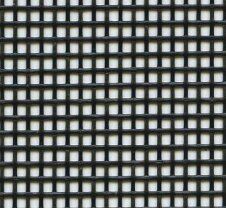
TuffScreen

Insect & weather protection
45% Openness

Heavy-duty insect mesh with maximum airflow. Neighbours can see through clearly, so privacy is not a feature of this fabric.

Privacy Low
View Through High
Airflow Maximum
UV Blocking 55%

45% Openness

Recommended:

  • Screened-in porch
  • Cottage deck
  • Gazebo ventilation
View Fabric Details

SunTex 90

Solar & light control
10% Openness

Balanced solar screen that cuts heat and glare while preserving reasonable outward visibility from inside the space.

Privacy Some
View Through Medium
Airflow Low
UV Blocking 90%

10% Openness

Recommended:

  • Sun-exposed patio
  • West-facing deck
  • Open backyards
View Fabric Details

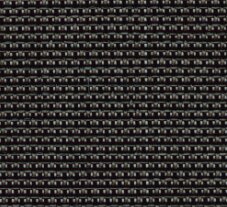
SunTex 95

Best all-around choice
5% Openness

Our most popular fabric with solid daytime privacy, excellent UV blocking, and a comfortable filtered-light quality inside.

Privacy High
View Through Low
Airflow Minimal
UV Blocking 95%

5% Openness

Recommended:

  • Backyard patio
  • Pergola enclosure
  • Residential deck
View Fabric Details

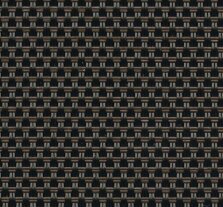
SheerWeave 4800

Maximum privacy
1% Openness

Near-opaque daytime privacy with softly diffused interior light. Neighbours cannot make out occupants or furnishings.

Privacy Maximum
View Through Minimal
Airflow None
UV Blocking 99%

1% Openness

Recommended:

  • Urban patio
  • Balcony privacy
  • Street-facing porch
View Fabric Details

Soltis Proof 502

Day & night privacy
0% Openness

Fully opaque fabric that provides complete visual blackout and total weather enclosure from either side, day or night.

Privacy Maximum
View Through None
Airflow None
UV Blocking 100%

0% Openness

Recommended:

  • Day/night privacy
  • Complete blackout
  • Weather protection
View Fabric Details

PanoramaFR

Preserve your view
0% Openness

Near-clear enclosure that preserves your view while blocking weather and UV. Fire rated.

Privacy None
View Through Maximum
Airflow None
UV Blocking <98%

0% Openness

Recommended:

  • Waterfront / scenic view
  • Weather enclosure
  • Fire-rated applications
View Fabric Details

Pergola Privacy Screen FAQs

What is the best type of privacy screen for a pergola?

A motorized zip-track roller screen. It mounts under the beam between two posts, rolls fully out of sight when you do not need it, and the zippered edges lock into the side tracks so the bay closes completely with no flapping. Lattice panels, fixed slats and hanging curtains cannot be put away, and curtains blow around in the wind.

The fabric is chosen per bay: SunTex 95 at 5% for daytime privacy with a view out, SheerWeave 4800 at 1% for stronger privacy, Soltis Proof 502 for full day-and-night privacy, PanoramaFR clear vinyl for wind and rain with the view kept, or TuffScreen insect mesh for a bug-free space.

Can screens attach directly to pergola posts?

Yes - the posts are the primary mounting surface for the side channel guides. On timber posts of 4x4, 6x6 or larger, channels are either surface-mounted with screws into the post face or recessed into a routed channel for a flush finish. On metal pergola posts, surface-mounted channels are fastened with hardware appropriate to the material.

We assess post material and size during the site visit and specify the right attachment method for your specific pergola.

Do I need to screen all four sides of my pergola?

No, and most installations do not. The most common configuration is three bays - back and both sides - leaving the bay facing the house open. Many projects screen only two: the back and whichever side has the greatest exposure.

We help identify which bays deliver the most value based on where the sightline problems actually originate. Screens can also be added incrementally: start with the two that matter and add another later.

What width can a single pergola screen panel span?

A single screen can be up to 5.84 m (19 ft 2 in) wide, or 6.96 m (22 ft 10 in) in the extra-wide version, and up to 4.26 m (14 ft) high. Clear vinyl screens go up to 3.04 m (10 ft) wide. Most pergola bays fall between 2.4 and 4.2 metres between posts, so one screen per bay is the norm.

For wider openings we split the bay into two screens with a centre guide, which can be an existing post or a custom centre channel support. On bays over about 3.7 m (12 ft) we recommend a wind sensor that raises the screen automatically in strong gusts.

Can I add screens to an existing pergola?

That is the most common scenario we work with - homeowners build or buy a pergola and later decide to enclose it. As long as the posts are structurally sound and the beams are accessible for mounting, screens can be added to any existing pergola. There is no minimum age or condition requirement beyond structural integrity. If a pergola is older and shows post deterioration, we flag it on the site visit before quoting.

Will screens interfere with a louvered or retractable roof?

No. The screen system operates entirely independently of the roof mechanism. The housing sits below the roof operating components and the side channels are on the post faces, separate from the roof drive system.

We plan the housing position to clear roof actuators, tracks and controls, so you can open or close the roof with the screens deployed or retracted in any combination.

Can I use different fabrics on different bays?

Yes, and it is a common planning approach. A typical combination is SheerWeave 4800 at 1% on the back bay facing the rear neighbour for maximum daytime privacy, SunTex 95 at 5% on the side bays for wind break and separation without the enclosed feel, and no screen at all on the bay facing the house and garden.

The hardware and system are identical across bays - only the fabric weave changes. We discuss this at the planning visit and it is itemized in the quote.

How is the bottom of the screen kept from lifting in wind?

The bottom bar is weighted and sits in a bottom track or threshold channel on the deck surface, which keeps it from lifting and holds the screen plumb and taut in moderate wind. Combined with side channels retaining the fabric edges, the system is stable in typical outdoor conditions. For particularly exposed pergolas, additional bottom bar weighting can be specified at time of manufacture.

Will pergola screens keep bugs out?

Yes, with the right fabric. Because the fabric edges zip into the side tracks and the bottom bar sits on the floor, there are no side gaps for mosquitoes and flies to get through. For insect control, choose TuffScreen, the dedicated insect mesh in our range; the solar privacy fabrics are woven for sun and privacy rather than to stop small insects. With TuffScreen on every bay, the pergola works like a screened-in room.

Can pergola screens stay down in rain and wind?

In everyday rain and breezy weather, yes. Under a solid or louvered roof, lowered screens stop most of the rain that blows in from the side, and PanoramaFR clear vinyl or Soltis Proof 502 blocks it completely. Wind capacity is commonly around 160 km/h on larger bays and higher on smaller ones, depending on the fabric.

For storms, raise the screens. A Somfy wind sensor can do it for you automatically, and a rain sensor is available too, so the screens stay safe when nobody is home.

Can I still see out through the screen?

Yes. With 5 percent or 10 percent fabric the outward view stays very usable during the day, while visibility from outside looking in is reduced much more strongly - that contrast is what creates the privacy effect. A 1 percent fabric goes further where a specific bay is purely about blocking a neighbour.

Can neighbours see in at night?

Solar screen fabrics work by contrast, so the effect reverses after dark: once lighting under the pergola is brighter than the outside, people outside can see more than they can during the day. If night-time privacy matters, Soltis Proof 502 is the fabric to choose - it is fully opaque and provides day and night privacy.

How long does a pergola installation take?

For most residential installations of one to three bays, the appointment takes two to four hours. A single bay typically takes about 90 minutes. Four-bay motorized enclosures with wiring take longer, and we confirm the expected timing when we quote.

What warranty is included?

Every system carries a 10-year manufacturer warranty, which includes the Somfy motor supplied with it, and our installation workmanship is covered for 1 year. Both are provided in writing.

View All FAQs

Ready to Turn Your Pergola Into an Outdoor Room?

Tell us which bays are exposed and we will recommend the screens, fabric and operation for each one.